Key takeaways
- Google said in a Nov. 13 Google Research post that external scientists and developers can use Gemini 4 models with /teamwork and /boost in Antigravity today.
- Google reported that /teamwork agents rewrote the Zircon microkernel into about 800,000 lines of safe Rust in two weeks and reached 95% top 1 accuracy on an NMR chemistry benchmark.
- Google is offering 10,000 academic researchers six months of free access to its highest usage tier, while a rewrite pattern and a formal proof pattern are still listed as coming later.
In this story 4 sections
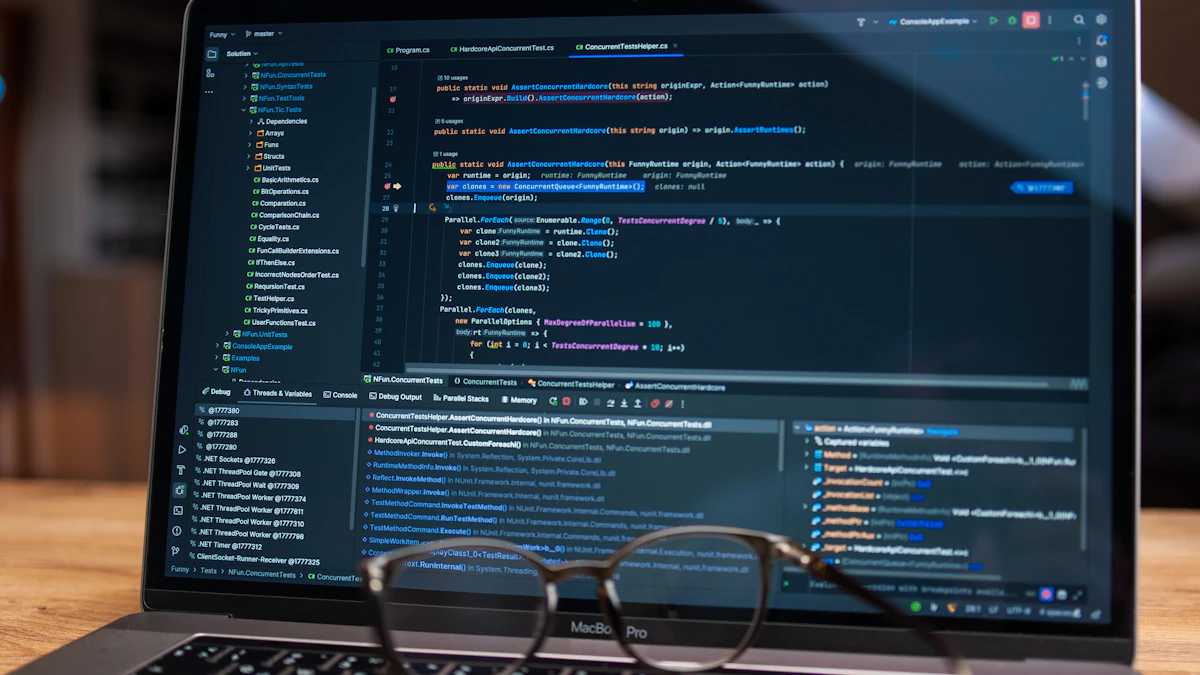
Google has opened /teamwork, the multi agent system inside its Antigravity coding platform, to outside scientists and developers who use Gemini 4 models, according to a Google Research blog post dated Nov. 13. The post, written by Google Fellow and Vice President Vahab Mirrokni, also lists what Google Antigravity teamwork produced inside the company, from a Rust rewrite of an operating system kernel to a chemistry workflow that identifies molecules from lab spectra.
Alphabet (NASDAQ: GOOGL) did not list pricing for the feature in the post. It did describe a program that will give 10,000 academic researchers six months of free access to its highest usage tier, with applications taken through an online form.
How /teamwork divides the work
Google said two weaknesses of current language models shaped the design. Answers can vary a lot from one attempt to the next, and models lose track of details as context piles up over tasks that run for days.
To deal with that, /teamwork spreads a job across separate agents. Coordinators pass tasks to fresh successor agents. Generator agents are paired with verifier agents, and critics check results from a clean context without seeing how the original answer was reached. In Google's words, "each specialized agent receives only the exact files and tools it needs for a specific step."
Where it can, the system leans on checks that sit outside the model, such as the Lean 4 proof checker, untouched software test suites, simulators and hardware counters. Workflows are written as plain language "patterns," and each prompt is routed to the pattern that suits it. The iterative solve and verify loop is also offered on its own as /boost.
Results Google reported
Google attributed most of these outcomes to its Gemini 4 Argon model:
- Chemistry: 30 agents working with a spectral simulator reached 95% top 1 exact matches and 100% top 3 accuracy when working out the structures of complex benchmark molecules from NMR data, close to double what a single agent managed, Google said.
- Rust rewrites: a two week campaign produced about 800,000 lines of safe Rust for the Zircon microkernel, which passed all kernel unit tests and booted on arm64. A port of the libgav1 AV1 video decoder came to about 170,000 lines with bit exact output. It began roughly 4x slower than the C++ version and finished 20% to 30% faster after profiling.
- TPU kernels: a pattern called DuoDiscover posted a 4.09x geometric mean speedup across 17 JAXBench kernels and 2.99x across seven hand tuned vLLM kernels.
- Go: a 9x9 Go engine that started from a basic AlphaZero implementation gained about 2,600 Elo points in under eight days.
- Google's own data centers: two scheduling changes shipped in Borg cut TPU workload preemption by 24% on some hardware types.
By our count, the Zircon figure works out to about 57,000 lines of Rust per day over the two week campaign (800,000 divided by 14).
Peer review and math
Google also pointed to Deep Review, a document checking tool that runs as a /teamwork pattern. Ahead of the STOC 2027 theory conference, authors of 578 submissions, more than a third of the total, opted in. In a survey of 70 of those authors, 90% rated the feedback as mostly or almost entirely factual, and 14% said it found technical gaps that took over an hour to fix.
On the math side, Google said a long proof pattern helped produce a proof of the Courtade Kumar conjecture that was then formalized in Lean 4. The company said human experts still confirm that each formal statement matches the original problem.
What is available now
The post states that "External scientists and developers can use Gemini 4 models with /teamwork and /boost in Antigravity and Deep Review today." A rewrite pattern for code migration, a formal proof pattern and other specialized workflows are described as coming later, with more updates promised in the coming weeks. Google did not give dates for those.
The results above are Google's own claims, published in the Google Research blog post, and have not been independently tested. The feature works with Gemini 4 models, a family that also includes the recently launched Gemini 4 Hydrogen and Gemini 4 Carbon, and DeepMind has said AlphaGenome 2 skills are headed to Antigravity as well. More coverage is on our AI page.
Share this story
Spotted an error? Tell us