Key takeaways
- The U.S. Copyright Office said in January 2025 that prompts alone do not make AI output protectable, but human modifications and creative arrangements can be.
- A logo can still work as a trademark through use, and the USPTO recommends a clearance search before filing, with a base fee of $350 per class.
- Canva's content license bans using its library templates and stock elements as part of a trademark, while its AI terms say you own most AI output.
In this story 9 sections
- Can an AI logo generator make a logo good enough for a real business?
- Can AI generated logos be copyrighted?
- Can AI generated logos be trademarked?
- How do you check that an AI logo is not too close to someone else's?
- Who owns a logo made with an AI logo generator?
- Can you use Canva templates or stock elements in your logo?
- Do commercially safe AI tools solve the legal problem?
- What should you put in a prompt to get a better logo?
- When is it worth hiring a designer instead?
Yes, an AI logo generator can give a small business a usable logo in an afternoon, but "usable" and "yours to protect" are two different things. The pictures come fast. The legal ownership, the trademark question and the fine print in each tool's terms take more thought, and that is where most owners get surprised later.
The questions below come from real searches, from "can AI logos be trademarked" to "can AI generated logos be copyrighted."
Can an AI logo generator make a logo good enough for a real business?
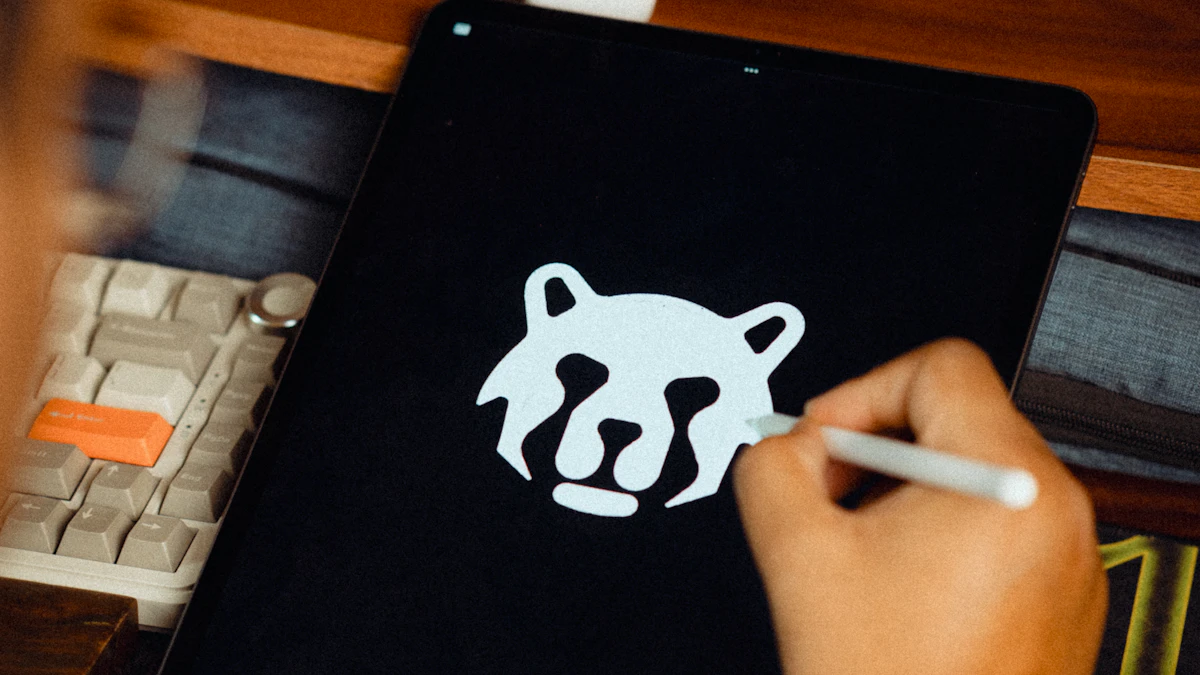
It can make a solid starting point, and sometimes a finished mark, if you treat the output as a draft rather than a final file. Most generators produce raster images, which look fine on a website header but can blur when you scale them up for a storefront or embroider them on a shirt.
A good business logo usually needs to work in one color, read clearly at the size of a browser tab icon, and stay simple enough to redraw. AI tools tend to add gradients, tiny details and lettering that is slightly off. Plan to clean up the text, simplify the shapes and rebuild the final version as a vector file (SVG or similar).
If you are new to describing what you want, our guide on how to write better AI prompts covers the basics that also apply to image tools.
Can AI generated logos be copyrighted?
Not the parts a machine decided on by itself. In January 2025 the U.S. Copyright Office released Part 2 of its report on artificial intelligence, concluding that AI outputs can be protected only where a human author has determined sufficient expressive elements.
The Office drew a clear line around prompts. Protection can come from creative arrangements or modifications of the output that a person makes, but not from the mere provision of prompts. It also said that using AI to assist in creating something, or including AI material in a larger human made work, does not by itself block protection.
For a logo, that means the human work counts. If you take an AI draft and redraw it, rearrange elements, change the lettering and make real creative choices, those contributions may be protectable. A logo that came out of a single prompt and went straight onto your packaging probably has thin or no copyright protection for the AI generated portion.
Can AI generated logos be trademarked?
Often yes, because trademark law cares about how you use the mark, not who drew it. The USPTO defines a trademark as any word, phrase, symbol, design, or combination of these that identifies your goods or services.
According to the USPTO, you become a trademark owner as soon as you start using the mark with your goods or services, and registration is optional. A federal registration does give broader rights, including nationwide rights, while unregistered rights are generally limited to the area where you actually do business.
The catch is similarity. The USPTO says one of the most common reasons applications get rejected is a likelihood of confusion, meaning customers would likely think your goods come from the same source as someone else's. AI tools learn from huge sets of existing images, so a generated logo can land uncomfortably close to a mark that already exists. That makes the next step important.
How do you check that an AI logo is not too close to someone else's?
Run a clearance search before you commit. The USPTO recommends searching its federal database at Trademark search, plus state trademark databases and the internet, before you apply.
A practical routine looks like this:
- Search your business name and any words in the logo in the USPTO Trademark search tool.
- Look up competitors in your industry and compare their marks side by side with yours.
- Run a reverse image search on your final logo to spot close matches.
- Check state trademark records for the states where you operate.
The USPTO notes that its examining attorney only checks for conflicts in the federal database. Searching state records and the wider web is your responsibility. If you decide to register, the USPTO lists a base application fee of $350 for each class of goods or services, so a mark covering two classes costs $700 before any attorney fees.
Who owns a logo made with an AI logo generator?
Under most major tools' terms, you do, at least as far as the company is concerned. The OpenAI Terms of Use say OpenAI assigns to you all its right, title and interest in the output, and that you can use it for commercial purposes if you follow the terms. Canva's AI Product Terms similarly say you own your output, with exceptions for output that modifies or incorporates Canva's licensed content.
Both sets of terms also warn that output may not be unique, so another user can receive the same or a similar result. And ownership under a company's terms is not the same thing as copyright. A tool can hand you whatever rights it has, but it cannot create copyright the law does not recognize.
That non uniqueness is the real business risk. If a competitor typed a similar prompt into the same tool, you could end up with lookalike logos and no strong copyright claim to separate them.
Can you use Canva templates or stock elements in your logo?
No, not if you want to treat it as your trademark. Canva's Content License Agreement lists, as a prohibited use, using any of its content as part of a trade mark, design mark, trade name, business name or service mark, with fonts as the exception.
This rule covers Canva's library content, such as templates, stock icons and illustrations. It is a separate issue from images that Canva's AI tools generate for you. Canva's AI terms also say that if you use an AI tool to edit a photo from the Canva library, you will not own that output. Other template based logo makers often have similar clauses, so read the license first.
Do commercially safe AI tools solve the legal problem?
They reduce one risk, not all of them. Adobe says its Firefly models are trained on licensed content from Adobe Stock and public domain content where copyright has expired, and it describes those models as commercially safe for that reason.
That addresses worries about training data. It does not change the Copyright Office's position on prompt only output, and it does not guarantee your result is free of confusion with an existing trademark.
What should you put in a prompt to get a better logo?
Be specific about style, shape and limits. Vague prompts like "modern logo for a bakery" return busy, generic art.
A stronger prompt names:
- The business name, exactly as it should be spelled
- A single symbol or idea, such as a wheat stalk or a rolling pin
- The style, for example flat, minimal, line art or badge
- Color limits, such as two colors on a white background
- What to avoid, like gradients, photo realism or extra text
Generate several rounds, pick the strongest concept, then refine it by hand. If you are deciding whether a paid chatbot plan is worth it for image work, see our comparison of ChatGPT Plus vs free. For other ways small business owners use these tools for visuals, our piece on AI headshots for LinkedIn covers similar ownership and quality tradeoffs.
When is it worth hiring a designer instead?
Hire one when the logo has to carry a brand for years, when you plan to register it federally, or when you need a full kit of files and color specs. A designer can take your favorite AI draft and turn it into an original vector mark, which also adds the human authorship the Copyright Office looks for.
A sensible middle path for many small shops is to use an AI logo generator to explore ideas cheaply, then pay a designer for a few hours of refinement. Before you order business cards, run that final clearance search one more time. It is far cheaper to change a logo now than after a cease and desist letter arrives.
More guides on everyday AI tools live in our AI section.
Sources
Share this story
Spotted an error? Tell us