Key takeaways
- Google announced on November 5 a $17 billion investment in its first Wyoming data center, located in Laramie County near Cheyenne.
- The campus will rely on a 702 MW natural gas fuel cell development from AEP and Bloom Energy, with carbon capture through a Tallgrass sequestration hub.
- Crusoe, which started the project as Project Jade, said on November 6 that Google has acquired its southeast Wyoming site, without disclosing a price.
In this story 4 sections
Seventeen billion dollars. That is what Google says it will put into its first data center in Wyoming, a campus in Laramie County just south of Cheyenne. The Google Wyoming data center was announced on November 5, and a day later Crusoe, the developer that started the project, confirmed that Google had bought its site outright.
The announcement closes a strange year for the project. It began under another company's name, lost its original developer in June, and quietly changed hands before Google stepped forward in public. Here is how the pieces fell into place, based on Google's own post, Crusoe's statement and local reporting.
From cattle land to Project Jade
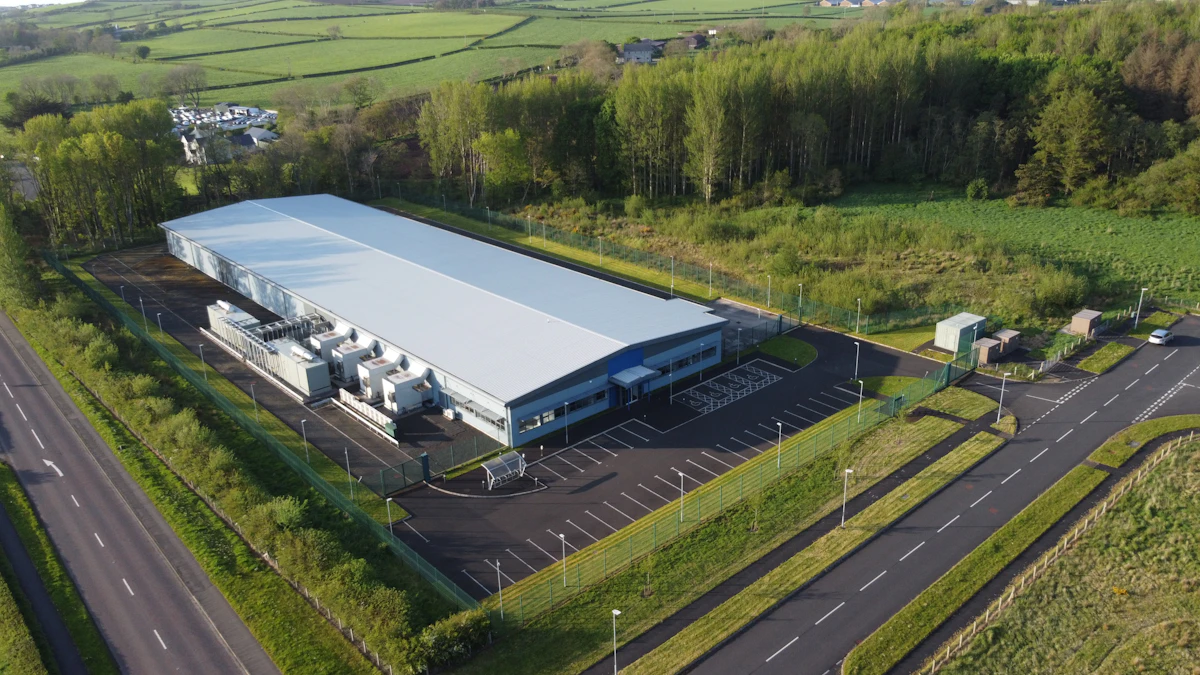
The campus sits in Switchgrass Industrial Park, an area of nearly 1,400 acres that was once seasonal grazing land. The early plan, called Project Jade, came from Denver based Crusoe working with Tallgrass Energy, which would supply the power on site. That "bring your own power" model is the core of the whole idea: the campus would not lean on the regular grid for most of its electricity.
- October 2025: Laramie County approves Switchgrass Industrial Park, according to POWER Magazine.
- January 2026: County commissioners unanimously approve Project Jade along with a Tallgrass power hub planned around 2.7 GW of new natural gas generation. A Tallgrass project director told POWER the energy side alone was a $7 billion investment, and officials said the campus could one day scale to 10 GW.
- June 2026: Bloomberg reports that Crusoe paused work after key customers, including Google, raised concerns about cost and construction time, as summarized by TechRadar. Crusoe said it paused "at the request of our customer." Black Hills Energy said the project would continue.
- June 30, 2026: A site plan amendment filed with Laramie County names Jupiter Star Holdings, a wholly owned Google subsidiary, as the builder.
- July 8, 2026: Cowboy State Daily reports that Google is the owner and that Project Jade has become Project Tembo, with a planned completion date of 2031.
- August 13, 2026: Laramie County holds a hearing on a 32.83 acre office support facility that was not in the original permit, per the same report.
- November 5, 2026: Google announces the $17 billion investment.
- November 6, 2026: Crusoe says Google has acquired its southeast Wyoming site.
What Google actually committed to
In a post signed by Steve Walter, its vice president of global infrastructure and energy, Google laid out the plan. The power piece is the headline. Google says it contracted with American Electric Power for a 702 MW fuel cell development with carbon capture and storage. Bloom Energy makes the fuel cells, which run on natural gas, and the captured carbon is meant to go to Tallgrass's Eastern Wyoming Sequestration Hub.
Google says that deal brings its total contracted carbon capture capacity to nearly 1 gigawatt. It will also draw power from gas generators run by Tallgrass and Black Hills Energy, and it is studying whether Tallgrass's combined cycle turbines can be fitted with carbon capture too. The buildings will be air cooled.
The company also promised "hundreds of millions of dollars" in local property taxes for Laramie County and its school district. A community council is being formed with Tallgrass, Black Hills, Related Digital, AEP and Bloom Energy. Google says more than 200 residents came to a community meeting in Cheyenne.
Crusoe's version of the handoff
Crusoe's statement does not give a price for the site. It says the company handled site selection, government approvals and a hybrid power plan built with Tallgrass, mixing fuel cells, grid power and gas turbines. CEO Chase Lochmiller said Crusoe's work "set up the Wyoming project for construction and eventual operation."
The tone is friendly. Crusoe notes it is still building a separate Google campus in Armstrong County, Texas, outside Amarillo, and it says it has more than 6 GW contracted and over 40 GW in its pipeline. That framing differs from the June reports, which described a developer pushed aside over cost and timing. Cowboy State Daily went further and said the project "never hit the pause button" at all.
The numbers that still do not line up
Readers should treat a few figures with care. Bloomberg's June report put peak use at 1.8 GW. POWER described 2.7 GW of new gas generation, and Cowboy State Daily called the campus itself 2.7 GW. Acreage also shifts between reports, from 600 acres for Project Jade to 716 acres for Project Tembo. Google's post does not settle these, and it does not use the Tembo name.
The bigger question is spending discipline. Wall Street has been jumpy about AI infrastructure costs, as seen in the recent AI stock selloff and in Oracle's $20 billion raise to fund its own buildout. Google choosing to own the Wyoming site, rather than lease from a developer, suggests it wants tighter control over both the bill and the schedule. Other big platforms are making similar bets on AI capacity, from Uber's push into AI agents to Meta's latest acquisition.
County officials said in January that the first buildings could be running by mid 2027, and the Google filing points to completion in 2031. Whether Google holds to that pace is the next real test. For more coverage of big tech spending, see our tech section.
Sources
Share this story
Spotted an error? Tell us