Key takeaways
- Bitcoin is worth whatever buyers will pay on open markets, and the CFTC says its value comes entirely from supply and demand.
- The supply is capped just under 21 million coins, and the new coins per block are cut in half about every four years, currently 3.125 per block.
- For U.S. taxes the IRS treats bitcoin as property, so its value when you get it and when you sell it decides your gain or loss.
In this story 9 sections
- Why does bitcoin have value if it is not backed by anything?
- What actually sets the price of bitcoin?
- How does the 21 million limit affect the value?
- Does mining give bitcoin its value?
- Is bitcoin like digital gold?
- Why is bitcoin's price so volatile?
- Can bitcoin's value go to zero?
- How does the IRS treat bitcoin's value?
- What should you take from all this before buying?
No government sets the price of bitcoin and nothing physical sits behind it. So how does bitcoin get its value? Short version: from people. A coin is worth whatever buyers will pay for it at a given moment, and they pay because bitcoin has a fixed supply, can be sent anywhere without a bank, and is accepted by enough people to work as a kind of money. The longer version is more interesting, and it explains why the price can swing so hard.
If you are new to the coin itself, start with our plain English guide to bitcoin and come back. This article sticks to one question and the follow ups people ask most.
Why does bitcoin have value if it is not backed by anything?
Bitcoin has value because enough people find it useful and are willing to accept it in exchange for something else. That is also the basic logic of most money.
The Bitcoin.org FAQ puts it plainly: bitcoin's value comes "only and directly from people willing to accept them as payment." The same page argues that bitcoin works as money because it has the traits money needs: it lasts, it is easy to move, one coin equals any other coin, it is scarce, it splits into small units, and it is easy to recognize.
What it lacks is a backer. The U.S. Commodity Futures Trading Commission (CFTC) notes in its virtual currency risk advisory that virtual currencies "are not currently backed nor supported by any government or central bank" and do not have legal tender status. Nobody promises to buy your bitcoin back at a set price. Supporters see that independence as the point. Critics see it as the core weakness. Both are describing the same fact.
What actually sets the price of bitcoin?
Supply and demand on open markets set the price, trade by trade, around the clock.
When you see a bitcoin price on an app, you are looking at the most recent price at which a buyer and a seller agreed to trade on exchanges. If more people want to buy than sell at the current price, the price climbs until enough sellers show up. If sellers outnumber buyers, it falls. The CFTC says the value of virtual currencies is "completely derived by market forces of supply and demand."
That means the price reflects expectations as much as current use. Things that tend to pull demand up or down include:
- News about adoption, such as large companies or funds buying, or new ways to buy through regular brokerages (our bitcoin ETF explainer covers one of the biggest)
- Rules and enforcement, since a ban, a lawsuit or a friendly new law can change who is able to buy
- Interest rates and the wider economy, because when cash and bonds pay more, risky assets often lose buyers
- Security events, like exchange hacks, which can shake confidence quickly
- Crowd mood, which in crypto can swing from euphoria to panic in days
How does the 21 million limit affect the value?
The cap matters because it makes the supply predictable and finite, so any growth in demand has to show up as a higher price rather than more coins.
According to the Bitcoin Wiki's page on controlled supply, the number of new bitcoins created per block is cut in half every 210,000 blocks, or roughly every four years. The total will top out just under 21 million. Since the April 2024 halving, miners get 3.125 new bitcoins per block. The next cut, at block 1,050,000, drops that to 1.5625.
Compare that with a national currency, where a central bank can create more when it decides the economy needs it. With bitcoin, the issuance schedule is written into the software and known years ahead. Nobody can decide to print an extra million coins next Tuesday.
Scarcity on its own does not create value, though. Plenty of rare things are worthless because nobody wants them. The cap only helps when there is real demand on the other side.
Does mining give bitcoin its value?
No, mining does not set the value directly, but it plays a supporting role.
Miners run specialized computers that compete to add the next block of transactions to the blockchain. The winner earns new coins plus transaction fees. That work is what keeps the record of who owns what hard to tamper with.
A common belief is that bitcoin is worth what it costs to mine. The logic runs the other way. Miners spend on hardware and electricity because the coins they earn are worth something. When the price drops far enough, some miners shut down, and the network adjusts difficulty so blocks keep coming at a steady pace. Mining cost can act as a rough floor for miners' willingness to sell, but it does not decide what buyers will pay.
Is bitcoin like digital gold?
It is often compared to gold, and the comparison helps, but only partly.
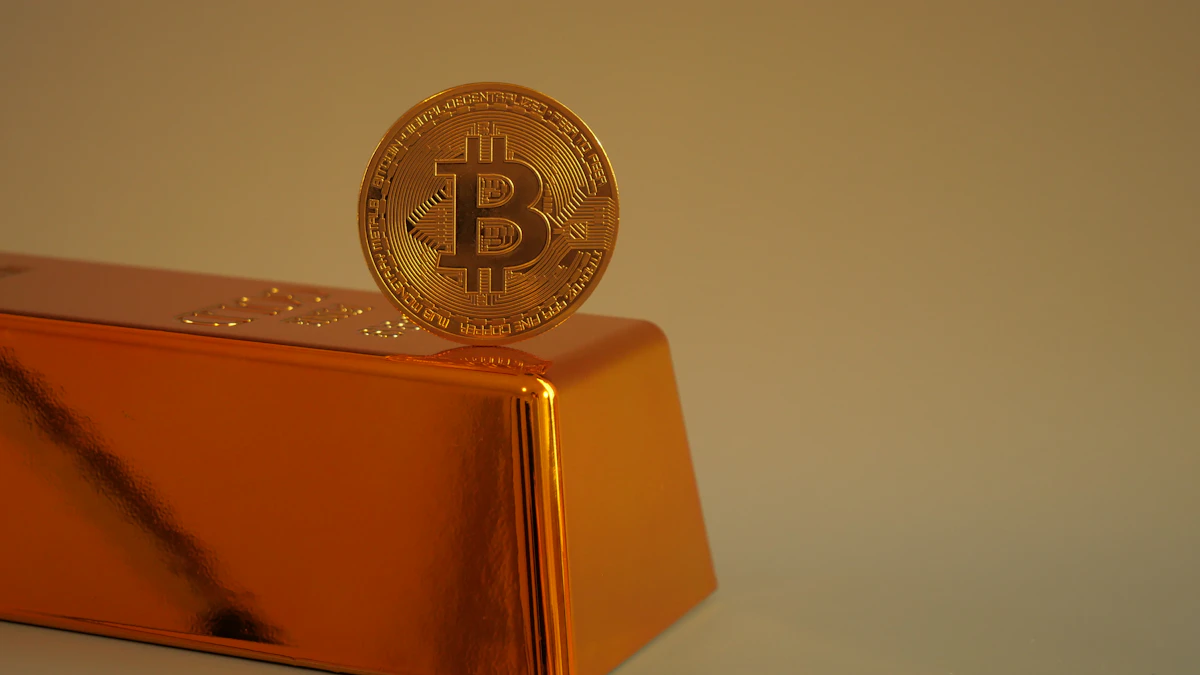
Gold and bitcoin share a few traits. Both are scarce, both are hard to produce more of quickly, and neither depends on a single government. Many holders treat both as a place to park value over the long run rather than something to spend at the store.
The differences are big too. Gold has thousands of years of history and real industrial and jewelry demand. Bitcoin launched in 2009 and its use is almost entirely financial. Bitcoin is far easier to send across the world in minutes, and far easier to lose if you misplace your keys. That is why safe key storage matters so much.
Why is bitcoin's price so volatile?
The price moves sharply because the market is still small compared with major currencies, and expectations change quickly.
The Bitcoin.org FAQ notes that it does not take much money to move the price up or down because the market is relatively small. Add round the clock trading, heavy use of borrowed money on some platforms, and constant news, and you get large daily swings. The CFTC lists "volatile cash market price swings or flash crashes" among its main warnings, along with the fact that most crypto cash markets are not supervised by a government agency.
For you, that means the dollar value of your holdings can drop a lot in a short time even when nothing about bitcoin itself has changed.
Can bitcoin's value go to zero?
Yes, in theory it can. Even Bitcoin.org's own FAQ answers "Can bitcoins become worthless?" with a one word "Yes," pointing to national currencies that collapsed.
Value that rests on people's willingness to accept something can fade if that willingness fades. A serious flaw in the code, a better rival, or a long loss of trust could all push demand down. Bitcoin has survived many crashes since 2009, which is one reason supporters believe it will last, but past survival is not a guarantee.
How does the IRS treat bitcoin's value?
For U.S. taxes, bitcoin is property, not currency. The IRS digital assets page says digital assets "are considered property, not currency," and income from them is taxable.
In practice, the value of your bitcoin matters on two dates: when you got it and when you sold, traded or spent it. The difference is generally a capital gain or loss. If you are paid in bitcoin for work, its value when you receive it counts as income. Our crypto taxes guide walks through what to report.
What should you take from all this before buying?
Bitcoin's value is real in the sense that people pay real money for it every second, but it is not anchored to anything that guarantees a price. It rests on scarcity, usefulness and shared belief, and all three are tested every time the market panics.
If you plan to buy, keep it to an amount you could watch fall by half without losing sleep, use a well known platform, and learn the basics of storage first. Our step by step guide on how to buy bitcoin is a good next stop, and you can find more explainers in our crypto section. One last check before you send money anywhere: if someone promises guaranteed returns on bitcoin, read our tips on spotting a crypto scam first.
Sources
Share this story
Spotted an error? Tell us