Key takeaways
- Google DeepMind released Humanity's First Exam on Kaggle on Nov. 24 with 544 everyday text and image prompts across 20 basic skills.
- A model scores on a question family only if all 16 answers across four related prompts are correct, and the best result in the report was 92.4% for GPT-6.2 Astra.
- Visual perception caused 73% of wrong answers, and Google is collecting new questions that models miss through a Kaggle competition running until Dec. 15.
In this story 4 sections
Google DeepMind's new Humanity's First Exam asks frontier AI models easy questions, then checks whether they get them right every single time. On that stricter test, the best model in the launch paper, OpenAI's GPT-6.2 Astra, kept a perfect record on 92.4% of question groups, and none of the 18 models tested reached 100%.
Alphabet (NASDAQ: GOOGL) unit Google DeepMind released the benchmark on Nov. 24 through Kaggle, along with a public leaderboard, a technical report and a three-week community competition that runs through Dec. 15. The company said the goal is to measure how reliably large language models handle everyday tasks rather than how far they can stretch on hard math or coding problems.
What Humanity's First Exam tests
The name plays on harder benchmarks that chase the ceiling of AI ability. This one looks at the floor. According to the Google blog post, the dataset holds 544 elementary prompts, mixing text and images, spread over 20 basic capabilities.
The technical report breaks that down further:
- The 544 prompts sit in 136 families. Each family has one seed question and three slight variations.
- 316 prompts (58.1%) include an image, and 228 are text only.
- Skills range from counting objects and naming colors to reading charts, following arrows, sorting lists and simple logic.
- Each model answers every prompt six separate times, zero shot, with no tools or system prompt.
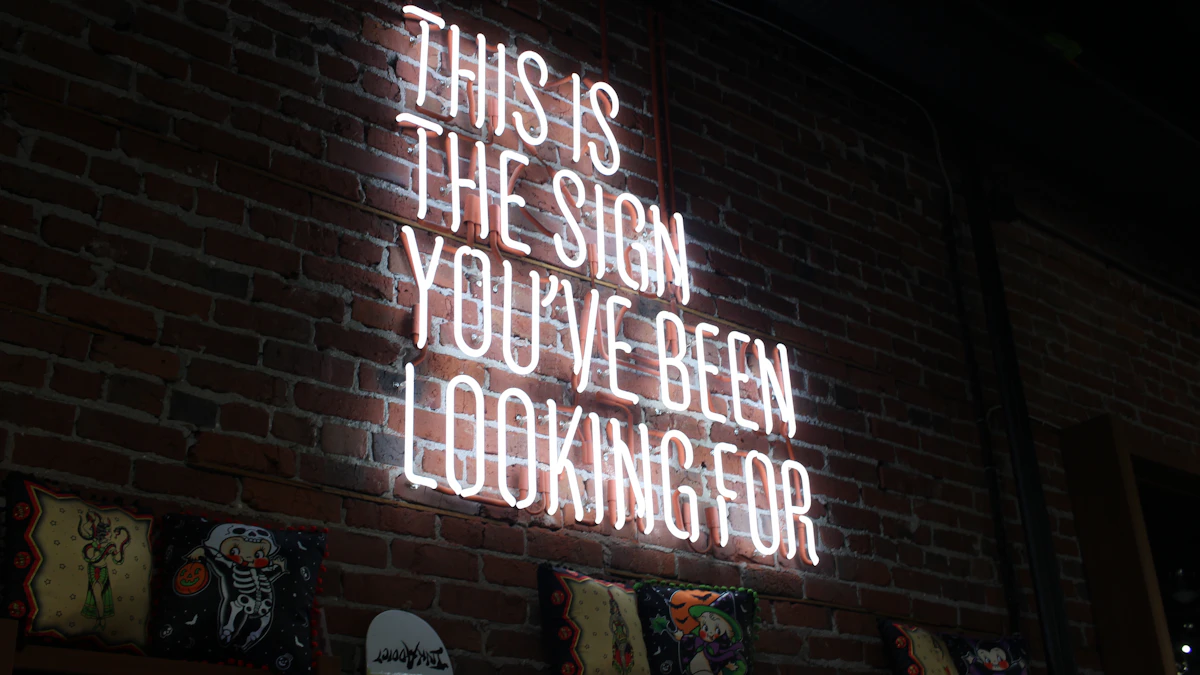
Google's own sample question asks a model to name the color of the third letter in each word of a neon sign. A person can do that in seconds. The test is whether a model does it correctly on every attempt and on every rewording.
How the scoring works
The headline number is called family pass^4. A model earns credit for a family only if 16 answers in a row are correct: four attempts on each of the four related prompts. Grading is done by Gemini 3.1 Pro acting as a fixed judge at temperature zero, the report said.
That design rewards consistency. By our count, a single full run means 3,264 graded answers per model (544 prompts times six generations), so a model that is right most of the time can still lose many families to one stray miss.
The report also tracks a "Family Reliability Gap": the difference between solving a family at least once in four tries and solving it every time. Across the 18 models, that gap ran from 7.6 to 80.1 percentage points.
Results from the launch report
Every top model could solve almost every family at least once. Consistency is where they split. Selected family pass^4 scores from the report, at each model's highest reasoning setting:
- GPT-6.2 Astra (OpenAI): 92.4%
- GPT-6.2 Sol (OpenAI): 86.9%
- Gemini 4 Neon (Google): 85.8%
- Claude Fable 5.2 from Anthropic (NASDAQ: ANT): 73.7%
- Gemini 3.5 Flash-Lite (Google): 18.6%, the lowest of the group
Google's best entry, Gemini 4 Neon, finished 6.6 points behind GPT-6.2 Astra on our math (92.4 minus 85.8). We compared Neon with earlier Gemini releases in our Gemini 4 Neon price and benchmarks story.
The authors said most remaining mistakes involve visual perception, which accounted for 73% of wrong answers. They also found that giving models more reasoning time helped far less on image tasks than on text and symbol tasks.
"Real-world deployment requires evaluations that enable us to measure and raise the reliability floor," the researchers wrote in the report.
The Kaggle competition and what comes next
Google is asking the public to help keep the test current. Through Dec. 15, people can enter the Kaggle competition by submitting everyday questions that current models still answer incorrectly, the company said. Live results are posted on the HFE leaderboard on Kaggle.
The company did not say whether winning questions will be added to the scored set or when the next update will land.
For readers, the takeaway is practical. A model that aces a hard exam can still slip on a simple chart or a sign, which is the same kind of error covered in our guide to AI hallucination. More coverage of new models and benchmarks is on our AI page.
Sources
Share this story
Spotted an error? Tell us