Key takeaways
- OpenAI said 35 of 322 minibinders designed by its GPT-6 models bound their intended targets in tests run by its research partner Onava, a rate of 10.9%.
- IL-17A accounted for 18 of the 35 proteins that tested positive, while TrkA produced a single success.
- The company said its lab pipeline still used specialized tools such as Boltz-2 and ESMFold2 to filter candidates, so the work does not show end to end design.
In this story 4 sections
OpenAI said 35 of 322 laboratory proteins designed by its GPT-6 models attached to their intended human targets, a hit rate of 10.9%. The company published the OpenAI protein design results on Nov. 24 in a report and a companion preprint, presenting them as evidence that a general purpose reasoning model can do work that until now needed software written only for proteins.
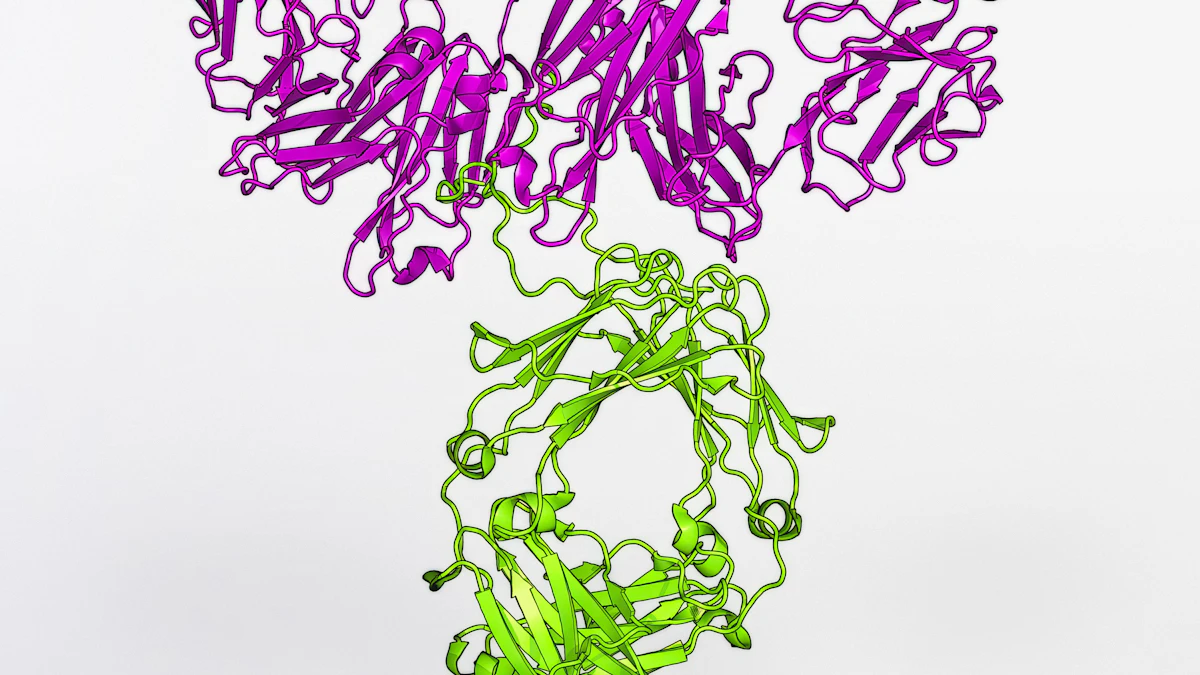
The molecules in question are minibinders, small proteins meant to latch onto one spot on a larger protein. That mechanism sits behind many drug candidates. OpenAI said its models produced the three dimensional shapes, and in part the sequences, using reasoning and code instead of calling a dedicated biology model for the design step. Its research partner Onava made the proteins and ran the binding tests.
How the five targets performed
The company listed the proteins that tested positive by target:
- IL-17A: 18
- VEGF-A: 8
- PD-L1: 5
- IL-7Ra: 3
- TrkA: 1
One target carried the result. Dividing 18 by the 35 positives gives 51%, so more than half of everything that worked came from IL-17A, and three of the five targets produced five successes or fewer. OpenAI said the original RFdiffusion study reported higher hit rates, and added that such rates depend on how candidates are filtered and on how binding is defined.
Writing new sequences for shapes it had not seen
A second experiment handed the models protein shapes with the real sequences withheld and asked them to write sequences that would fold the same way. Results by target were 75 of 88 for MDM2 (85%), 26 of 42 for VEGF-A (62%) and 8 of 59 for PD-1 (14%). Adding those pairs gives 109 of 189, or 58% across the three. The sequences were not copies: the median difference from the original ran to 50% of positions for VEGF-A, 43% for MDM2 and 15% for PD-1.
On three shapes that had never been published, which removes any chance the answer was memorized, the rate fell to 14 of 107, or 13.1%.
Antibody loops
Reshaping the binding loops of existing antibodies went better than designing from scratch. Of 182 designs across six VHH antibodies aimed at IL-4Ra, 128 showed signs of binding, a rate of 70%. Of 272 fragments drawn from five therapeutic antibodies, 179 still bound PD-1 or PD-L1, or 66%.
The benchmark numbers, and the weak spot
OpenAI also reported computational scores, which it called preliminary because no lab confirmed them. On the 30 MotifBench challenges, an internal model the company did not name passed 43.7% against 27.8% for RFdiffusion. On the PoseBusters set for small molecule docking, GPT-6.2 placed 93% of molecules correctly and the internal model 96%, against 50% for DiffDock-L. Mean DockQ scores for antibody docking climbed across model generations, from 0.05 for GPT-5.6 to 0.28 for GPT-6, 0.57 for GPT-6.2 and 0.81 for the internal model.
One task went the other way. Predicting a full structure from a sequence, the generalist models reached a mean TM-score of 0.38 at best against 0.93 for ESMFold2, a tool built for that job.
What the company says the results do not show
The lab pipeline still leaned on specialized software, including Boltz-2, OpenDDE and ESMFold2, to pick which designs to make. "Our results therefore do not yet establish that our models can generate de novo minibinders end-to-end," OpenAI said. Binding in a dish also says nothing yet about whether a protein is selective, stable or active in a body, and the company flagged possible memorization in the sequence design benchmarks.
OpenAI pointed to its Preparedness Framework on the risk side and wrote: "The same capabilities that help scientists design proteins for new medicines could also be misused." The report does not say whether the models used in the lab work are available to outside researchers, and the pre-released version of GPT-6.2 that did the design work is not described as a product.
The release follows OpenAI's MedChemBench results for GPT-6.2 Astra on Nov. 23 and its essay proposing shared limits on AI training. Full figures and methods are in the OpenAI report and the preprint. More coverage of model releases and AI research is on our AI page.
Sources
Share this story
Spotted an error? Tell us