Key takeaways
- Google and Blue Origin signed a launch services agreement on Nov. 19 to fly Project Suncatcher satellites on the New Glenn rocket.
- The launch is targeted for the first quarter of 2029 and will place satellites in a sun-synchronous orbit, each with roughly a data center rack of compute.
- Neither company disclosed the contract value, the number of satellites or the tests planned for the mission.
In this story 3 sections
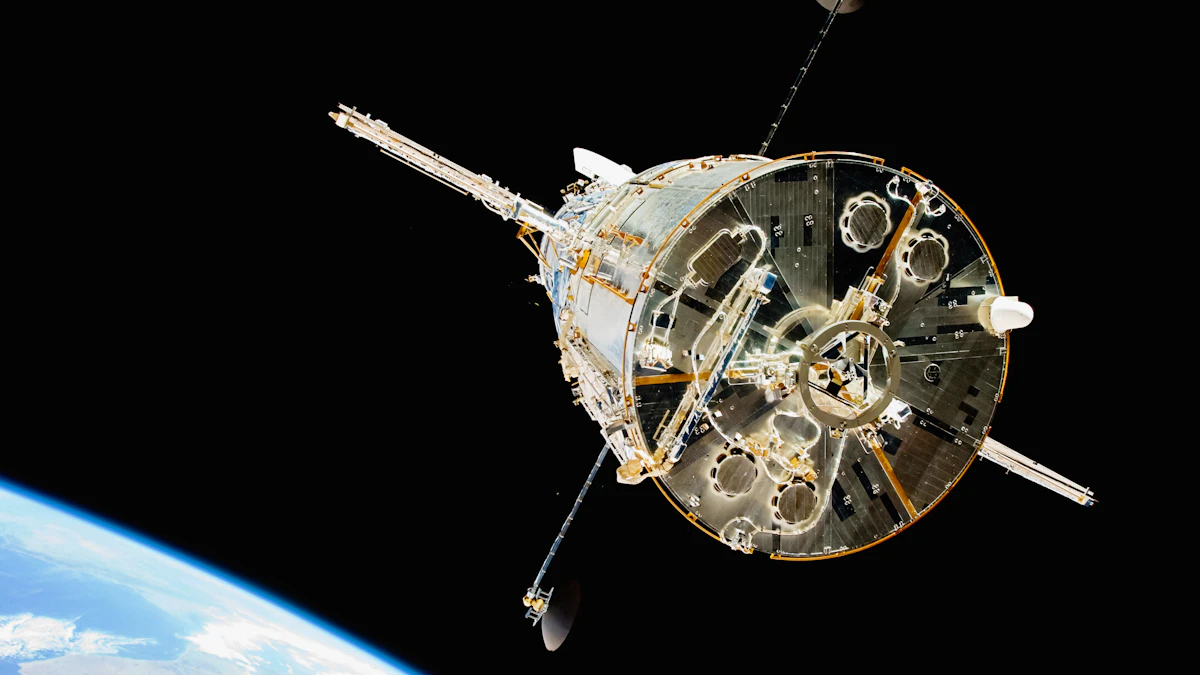
Project Suncatcher, Google's research effort to run AI computing on solar powered satellites, now has a ride for its first heavy-lift mission. Google, part of Alphabet (NASDAQ: GOOGL), has signed a launch services agreement with Blue Origin, which will carry the satellites on its New Glenn rocket in the first quarter of 2029, both companies said on Nov. 19.
According to Google's announcement, each satellite on the flight will hold computing capacity on roughly the scale of a data center rack. The spacecraft are headed for a sun-synchronous orbit, a polar path that keeps a satellite at a consistent angle to the sun.
Neither company disclosed the value of the contract, how many satellites will fly or which tests the mission will run.
From research paper to dedicated rocket
- Nov. 4, 2025: Google introduced Project Suncatcher as a research moonshot, describing a network of linked satellites that carry its Tensor Processing Unit (TPU) AI chips and run on sunlight. It released a preprint covering constellation design and early radiation testing of its TPUs.
- Early 2027 (original target): Google said its next step would be a learning mission with Planet to put two prototype satellites in orbit to test the hardware. A first prototype is already working, as we covered in our report on the Google data center satellite.
- Nov. 19, 2026: Google named New Glenn for its first dedicated heavy-lift Suncatcher launch.
- First quarter of 2029: the target window for that launch.
By our count, the window opens 38 months after Google first described the project, measured from November 2025 to January 2029, the first month of the target quarter.
What each company said
Google framed the agreement as one step in a long plan. "Project Suncatcher is a long-term moonshot to scale AI infrastructure in space by tapping into the abundant solar power in orbit," said Travis Beals, a senior director at Google. In the company's blog post, Beals wrote that the dedicated launch builds on Google's work with other satellite and launch partners, though he did not name them.
Blue Origin, which is privately held, presented the contract as the kind of work its largest rocket was designed for. "Project Suncatcher represents the ambitious missions New Glenn was built to support," said Jordan Charles, senior vice president of New Glenn at Blue Origin.
Why Google is looking at orbit
Google's stated reason is power: sunlight is plentiful in orbit, and the company wants to learn whether it can feed AI hardware at large scale. On the ground, the race for capacity keeps producing bigger deals, such as the Blackstone and Amazon data center agreement we covered this week.
Google has not said when, or whether, Suncatcher would move from research into commercial service. More coverage of AI infrastructure and Big Tech is on our tech page.
Sources
Share this story
Spotted an error? Tell us