Key takeaways
- Waymo closed a $5 billion loan led by PIMCO, Blackstone and Sixth Street, with Goldman Sachs as sole lead bookrunner.
- It is Waymo's first debt financing, following a $16 billion equity round in February at a $126 billion valuation.
- Waymo says the money supports expansion in current cities and new markets in the US, Europe and Japan, while federal safety probes continue.
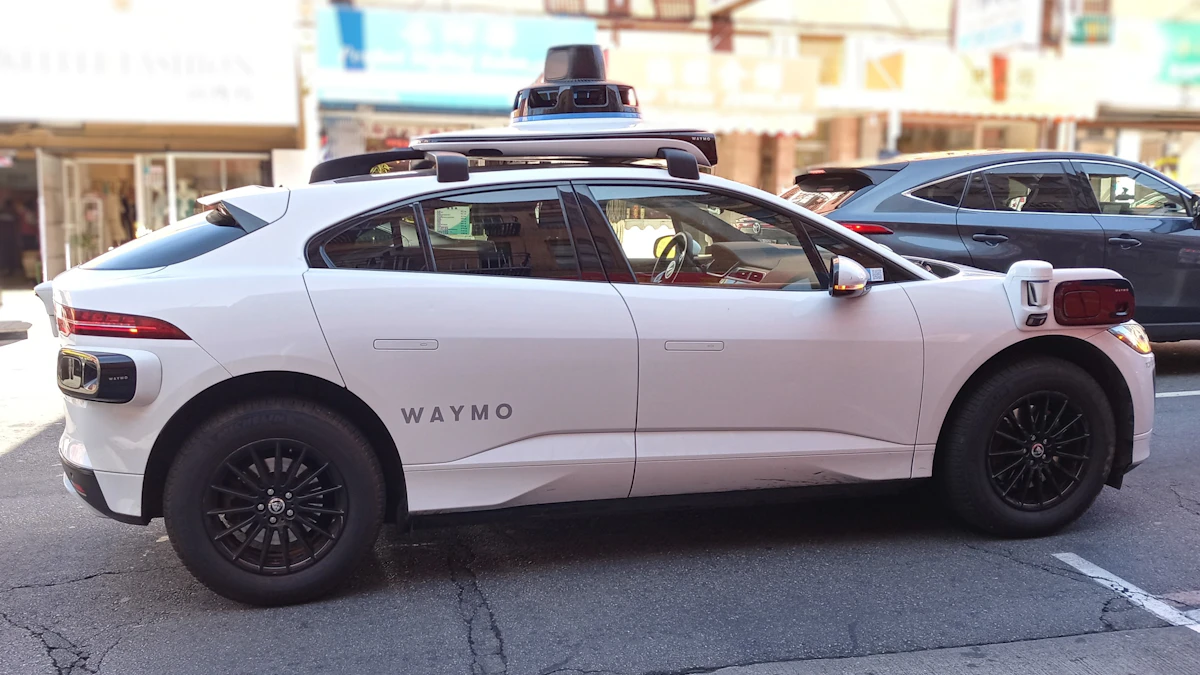
Waymo has closed a $5 billion loan, the first time the Alphabet robotaxi company has borrowed money instead of selling stock or leaning on its parent. The Waymo $5 billion loan comes from a group of lenders led by PIMCO, Blackstone and Sixth Street, according to TechCrunch, and Waymo says it will help fund expansion in its current cities and new markets in the US, Europe and Japan. Here is what happened, why a company valued at $126 billion is taking on debt, and what it could mean for riders.
What happened
Waymo announced the financing on Thursday, October 8, in a post on its blog. TechCrunch reported that PIMCO, Blackstone and Sixth Street led the lending group and that Goldman Sachs was the sole lead bookrunner, the bank that organized the deal.
The list of other lenders reads like a who's who of American money managers. TechCrunch named Capital Group, Loomis Sayles, T. Rowe Price, Apollo, Blue Owl, Diameter Capital Partners, Franklin Templeton, Fidelity Management and Research Company, HPS Investment Partners and Oaktree.
Waymo described the loan as giving it financial flexibility and a stronger balance sheet. A spokesperson told TechCrunch it positions the company to "capitalize on the significant opportunities ahead," and Waymo called the deal a step in its evolution into a "scaling commercial enterprise."
The deal grew along the way
The final number is bigger than first expected. In early September, Bloomberg News reported that Waymo was in final talks to raise more than $3 billion in its first debt deal, according to a report republished by Transport Topics. Bloomberg's sources said the debt was unrated and could price at more than 500 basis points, or 5 percentage points, over its benchmark. Waymo, Goldman Sachs and the lead lenders declined to comment at the time.
Neither TechCrunch nor Waymo's announcement, as summarized by TechCrunch, disclosed the final interest rate, maturity or collateral. Those details may come out later, but for now the size and the lender list are the confirmed facts.
Why the Waymo $5 billion loan matters
Waymo is not short on investors. In February 2026, it raised $16 billion in equity at a $126 billion valuation, in a round led by Dragoneer Investment Group, DST Global and Sequoia Capital. Alphabet supported that round and remains the majority investor. Before that, Waymo raised $5.6 billion in 2024, $2.5 billion in 2021 and $3.2 billion in 2020.
So why borrow? There are a few reasons that matter here.
Debt does not dilute owners. Selling more stock shrinks everyone else's slice. A loan has to be paid back with interest, but it leaves ownership untouched. For a company with a lofty valuation, that tradeoff can make sense.
Robotaxis are expensive to scale. Every new city needs vehicles, sensors, depots, charging and staff. Transport Topics, citing Bloomberg, said Waymo is looking for more kinds of capital as it grows its fleet and faces rising AI costs.
Lenders are a vote of confidence. Big credit funds lend when they believe a borrower can produce steady cash to pay them back. Bloomberg also framed the debt as a way for capital markets investors to get to know Waymo, which could matter if Waymo ever goes public.
There is a familiar precedent. Uber raised its first debt in 2016, $1.15 billion from leveraged loan investors, and went public three years later, according to Transport Topics. Nobody has announced a Waymo IPO, and it would be a mistake to read one into this deal. But the pattern is worth noting.
The deal also fits a broader trend of AI companies turning to private credit. SpaceX is reportedly seeking $40 billion in debt to buy Nvidia AI chips, and Bain recently estimated that AI needs $6 trillion a year in new revenue by 2031 to pay for the infrastructure being built. Large financings are spreading beyond AI too, as seen in OKX's funding round at a $25 billion valuation.
Where Waymo operates today
Waymo started as Google's self driving car project and tested on roads in Silicon Valley and the Bay Area before launching in Phoenix in 2016, its first robotaxi market. Its commercial growth sped up after it won the final California permit to charge fares in August 2023.
TechCrunch says Waymo now offers rides in 15 markets, including:
- California: Los Angeles, San Francisco and San Diego
- Texas: Austin, Dallas and Houston
- Florida: Miami, Orlando and Tampa
Waymo is also testing in London and Tokyo and plans to launch in both cities.
How busy is the service?
In September, Bloomberg reported that Waymo was handling more than 500,000 paid trips a week across 14 US cities, with a goal of 1 million paid weekly rides in 20 cities worldwide this year, according to Transport Topics. The same report said Waymo was laying groundwork to test in more than a dozen places. In August, Waymo said it had built a custom chip to improve robotaxi performance.
Who is affected
Riders in new cities. The clearest effect of fresh money is more places to hail a driverless car. If Waymo hits its goal of 20 cities, millions more Americans could have the option within reach.
Riders in current cities. More capital usually means more vehicles, which can mean shorter waits and wider service areas. Waymo has not given specific fleet targets tied to this loan, so treat this as a possibility rather than a promise.
Rideshare drivers and rivals. Every city Waymo enters puts pressure on human drivers for Uber and Lyft and on competing robotaxi efforts. Funding at this scale makes Waymo harder to catch.
Investors in Alphabet. Waymo is part of Alphabet's "Other Bets." A loan lets Waymo grow without asking its parent for more cash or diluting Alphabet's stake.
The safety questions have not gone away
The financing lands while regulators are still examining Waymo. According to TechCrunch, the National Highway Traffic Safety Administration's Office of Defects Investigation opened a probe into Waymo vehicles illegally passing school buses. NHTSA also opened an investigation after a Waymo robotaxi struck a child near a school at about 6 mph; the child suffered minor injuries. Separately, the National Transportation Safety Board opened its own investigation earlier this year after Waymo vehicles were seen illegally passing stopped school buses many times in at least two states.
These probes matter for the business case. Lenders are betting on steady growth, and any finding that forces a recall or slows approvals in new cities would test that bet.
What to watch next
- Final terms. Look for the interest rate and maturity, which will show how much risk lenders think Waymo carries.
- New city launches. London and Tokyo are the big ones, along with more US metros.
- Ride numbers. Watch whether Waymo reaches its goal of 1 million paid rides a week.
- Regulatory outcomes. The NHTSA and NTSB investigations could shape how fast Waymo can grow.
For more on the business of big tech, startups and the internet, visit our tech news section.
Frequently asked questions
Who lent Waymo $5 billion?
PIMCO, Blackstone and Sixth Street led the lending group, with Goldman Sachs as sole lead bookrunner. Other lenders include Capital Group, T. Rowe Price, Apollo, Blue Owl, Fidelity, Franklin Templeton and Oaktree, according to TechCrunch.
Is this Waymo's first loan?
Yes. TechCrunch says it is Waymo's first debt financing. Until now the company relied on Alphabet and outside equity investors.
What will Waymo use the money for?
Waymo says the loan strengthens its balance sheet and supports expansion in existing cities and new markets in the US, Europe and Japan.
Does this mean Waymo is going public?
No IPO has been announced. Some observers compare the deal to Uber, which borrowed for the first time in 2016 and went public three years later, but that is a comparison, not a plan.
Sources
Share this story
Spotted an error? Tell us