Key takeaways
- Most AI in use today is narrow AI, and Google DeepMind researchers placed chatbots like ChatGPT only in the lowest "Emerging AGI" level of their framework.
- OpenAI's Charter defines AGI as highly autonomous systems that outperform humans at most economically valuable work, while other groups use test score or task based bars.
- Forecasts differ widely: Metaculus forecasters gave 50% odds of AGI by 2033 as of February 2026, while a 2026 Forecasting Research Institute survey put the expert median at 2050.
In this story 9 sections
Type "what is AGI" into a search bar and you will get two very different answers. In taxes, AGI means adjusted gross income. In tech, it means artificial general intelligence, the idea of an AI system that can handle almost any thinking task a person can, not just the one job it was built for. This guide is about the second meaning: what AGI is, how it differs from the AI you already use, and what forecasters actually say about when it might show up.
What is AGI in AI?
AGI is a hypothetical AI system that can match or beat human ability across a wide range of mental tasks, instead of excelling at one narrow job. IBM describes it as a stage of development in which an AI system can match or exceed human cognitive abilities across any task.
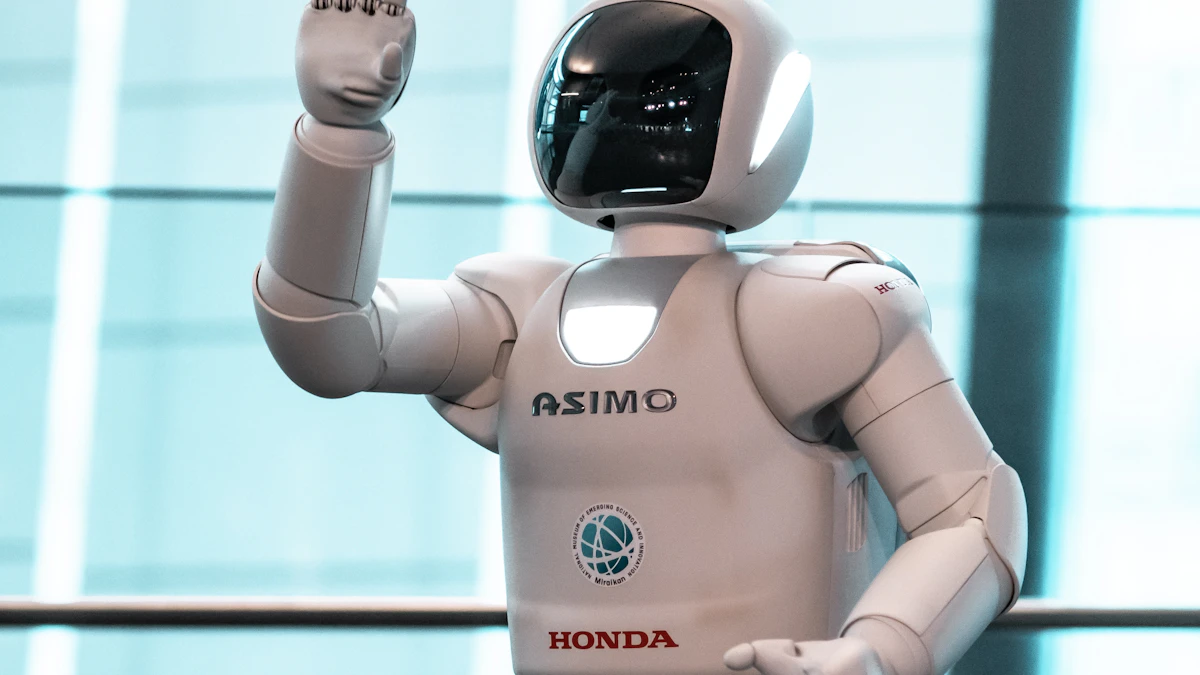
The key word is "general." A chess engine beats every human alive at chess, but it cannot write an email or plan a trip. An AGI would be able to pick up new kinds of work and learn new skills the way a capable adult does.
There is no single official definition, and that matters later when we talk about timelines. OpenAI's Charter defines AGI as "highly autonomous systems that outperform humans at most economically valuable work." That is a high bar tied to jobs and the economy. Other groups use bars based on test scores or the share of tasks a system can do well.
How is AGI different from the AI we use today?
Today's AI is almost all narrow AI, meaning it is built and tested for a defined set of tasks. IBM calls narrow AI a term that effectively describes nearly all current AI, and notes that "weak AI" is roughly the same idea.
Spam filters, photo search on your phone, voice assistants and recommendation feeds all fall in this group. Even chatbots that seem broad still work within limits: they can be confident and wrong, they can struggle with long multistep projects, and they do not keep learning on their own after training. If you want the basics first, our guides to what AI is and how machine learning works cover how these systems are trained.
Is ChatGPT AGI?
No, ChatGPT is not considered AGI by most researchers, although some argue it sits at the very first rung of the ladder. The clearest framework comes from a Google DeepMind team whose paper, Levels of AGI, sorts systems by how general they are and how well they perform.
That paper placed ChatGPT, Bard, Llama 2 and Gemini in its lowest general category, "Emerging AGI," which it defines as performing equal to or somewhat better than an unskilled human across a wide range of tasks. The authors note that frontier language models as of September 2023 would count as Level 1 General AI under their scheme. So "emerging" is not the same as "arrived."
Chatbots like ChatGPT run on large language models, which predict text one piece at a time. Our explainer on what a large language model is walks through why that approach is powerful and where it breaks down.
What are the levels of AGI?
The DeepMind paper lays out six levels, from no AI at all up to superhuman ability:
- Level 0, No AI: ordinary software, like a calculator.
- Level 1, Emerging: equal to or somewhat better than an unskilled human.
- Level 2, Competent: at least the 50th percentile of skilled adults.
- Level 3, Expert: at least the 90th percentile of skilled adults.
- Level 4, Virtuoso: at least the 99th percentile of skilled adults.
- Level 5, Superhuman: outperforms 100% of humans.
Each level can apply to a narrow task or to general ability. A system can be superhuman at protein folding and only emerging in general terms. The paper also suggests that OpenAI's jobs based definition lines up best with the Virtuoso level, which shows how far apart popular definitions can be.
What is the difference between AGI and ASI?
AGI means roughly human level general ability, while ASI (artificial superintelligence) means ability beyond humans at virtually everything. IBM describes ASI as exceeding human ability across virtually all tasks and treats AGI as a step that would come first. In the DeepMind framework, Level 5 general AI is labeled ASI.
An everyday comparison helps. AGI is like hiring a strong, adaptable new employee who can learn any desk job. ASI would be an employee better than the best person in every field at once.
How would we know if AGI has been reached?
Nobody agrees on one test, which is a big reason headlines keep claiming and denying it. IBM points out that computer scientists today do not consider the famous Turing Test an adequate measure of AGI, since a system can sound human in chat without being broadly capable.
Other proposed checks include:
- The coffee test (credited to Steve Wozniak): could a machine walk into an unfamiliar home and make a cup of coffee?
- Benchmarks like ARC-AGI, which IBM notes do aim to measure general reasoning on puzzles a system has not seen before.
- Work based tests, such as whether AI can complete long, real professional tasks at a reasonable cost.
The DeepMind authors argue for judging what a system can do rather than how it works inside, and for treating AGI as a path with milestones rather than a single finish line.
How far away is AGI?
Forecasts range from a few years to several decades, depending on who you ask and how they define AGI. Here is what the main sources say:
- AI company leaders have said AGI could arrive within 2 to 5 years, according to a review of expert forecasts by 80,000 Hours.
- Metaculus forecasters, as of February 2026, put the odds at 25% by 2029 and 50% by 2033, according to the same review.
- A 2023 survey of thousands of AI researchers (AI Impacts) gave a median of a 25% chance in the early 2030s and 50% by 2047, for AI that can do every task better or more cheaply than people.
- The Forecasting Research Institute surveyed experts and superforecasters in April and May 2026. Using a strict definition (beating the 90th percentile professional on at least 90% of non physical work tasks at no more than 5 times the cost of human labor), experts gave a median year of 2050 and superforecasters 2047, among those who expect it before 2100. Details are in the LEAP Wave 8 report.
The 80,000 Hours review itself cautions that none of these forecasts seem especially reliable. Treat any single date as a guess, not a schedule.
Why do AGI predictions vary so much?
They vary mainly because people are predicting different things. A forecast for "AI that can do most remote desk work" will land much sooner than one for "AI that can automate every occupation," and the AI Impacts survey shows exactly that gap: far later dates when researchers were asked about automating all jobs.
Incentives and vantage points differ too. Lab leaders see internal progress and also have reasons to sound ambitious. Academic surveys reach a broad mix of researchers, many outside frontier labs. Forecasting platforms update quickly with news. When a headline says AGI is a year away, the first question to ask is which definition the speaker is using.
Does AGI exist yet?
No widely accepted AGI exists as of this writing, though companies are openly building toward it. OpenAI's Charter says plainly that the timeline to AGI remains uncertain, and even commits OpenAI to stop competing with and start assisting a value aligned, safety conscious project that gets close first. AI firms are also writing about the risks of faster progress; our report on Anthropic's recursive self improvement warning covers one recent example.
For now, the practical takeaway is simple. The tools you use are narrow but improving fast, so it pays to learn where they help and where they still fail. When the next "AGI is here" headline appears, check the definition, check who is making the claim, and check whether independent testers agree. You can follow new developments in our AI section.
Sources
Share this story
Spotted an error? Tell us