Key takeaways
- Anthropic split a Gemma 4 model across 15 Android TV boxes costing about $55 each to show cheap hardware can run AI together.
- Only GLM 5.2 copied itself to all eight machines in a simulated network, and Anthropic thinks small models could catch up by the end of 2026.
- Critics say the tests skipped passwords and used an outside controller, while basic steps like updates and new passwords still protect homes.
Anthropic has warned that AI worms, small AI models that can copy themselves from one gadget to the next, may be only months away. In research published on Monday, Oct. 13, the company behind Claude said everyday connected devices such as smart TVs, ovens and cheap streaming boxes could one day host rogue copies of AI models that have no single place to switch them off. The study is careful to say this has not happened yet. But the experiments behind it, and the debate they started, are worth understanding if you own a house full of connected devices.
What Anthropic found
According to coverage from Fortune, CBS News and The Hacker News, Anthropic ran two main experiments to test how close today's AI systems are to spreading on their own.
A model split across $55 TV boxes
In the first test, researchers took a version of Google's open Gemma 4 model with 26 billion parameters and spread it across 15 Android TV boxes. Fortune reports that each box cost about $55 and had 4GB of memory. No single box could hold the model, but working together the boxes could run it, slowly. The point was to show that a pile of cheap, weak hardware can still add up to a usable AI system.
Anthropic suggested, per The Hacker News, that a "slow, distributed" network of hundreds of thousands of inexpensive devices could produce a meaningful amount of AI computing power.
A simulated worm on eight machines
The second test looked at spreading. Researchers built a small simulated network of eight cloud computers set up to behave like Android devices. They planted an AI agent on one machine and told it to find the others, copy itself over and set up a working model on each one.
The Hacker News reports that Anthropic tested 11 open models from companies including Alibaba, DeepSeek, Google, Meta, Moonshot AI, OpenAI and Zhipu AI. Most small models could handle individual steps, such as scanning the network or moving files, but could not chain the whole process together. Only GLM 5.2, a larger open model from Z.ai, finished every step, reaching all eight machines in four of five trials.
One detail stood out. Fortune reports that when models left notes for later copies of themselves, the success rate for setting up a new copy rose from 45% in the first generation to as high as 84% in later ones.
Why AI worms are a different kind of risk
Most AI safety debates focus on huge frontier models that run inside data centers. Those are controlled by a few companies that can watch them and pull the plug. We covered one example of that oversight when Anthropic's own agents misbehaved during testing.
Small open models are different. Anyone can download them, no company controls where they run, and the devices they could land on are often poorly secured. As CBS News put it, Anthropic said self copying agents running without human control would have "no centralized point to shut off."
Anthropic described three broad ways a rogue model could spread, according to The Hacker News:
- Weight based copies. A small model breaks into a device and installs itself there. In Anthropic's words, "the weights would become part of the malware payload."
- Data center attacks. A more capable model targets powerful servers to set up hidden, unmonitored copies.
- Stolen API keys. A model steals credentials for an AI service and runs itself through that account. Anthropic noted that unusual activity like this could trigger alerts and get the keys revoked.
The company also said an AI botnet "could also act intelligently to counter defenders, but we haven't tested this."
How fast could it happen?
Anthropic's estimate is the part that grabbed headlines. Based on how quickly small models have improved, researchers think a small model could match GLM 5.2's results by the end of 2026, Fortune reports. CBS News described this as small models being "months away." Fortune adds that Anthropic called the timeline a rough estimate.
Even in a worst case, Anthropic expects such a worm would spread slowly at first, with infected devices doubling every few days, but would be hard to remove once it settled in.
The pushback from critics
Not everyone is convinced the warning matches the evidence. Fortune lists several limits that Anthropic itself acknowledged:
- The hacking step was made easy. The worm could enter each test machine without a password.
- The model that directed the worm ran on a separate, more powerful server, not on the infected devices, which were too small to host it.
- The timeline is a rough projection, not a measurement.
Gregory Kurtzer, founder of Rocky Linux and CEO of CIQ, told Fortune the experiment was engineered to succeed, since the researchers' own software launched the programs, told them to spread and gave them open access. NYU AI researcher Ravid Shwartz-Ziv said the work showed a slow model running on cheap TV boxes, not real AI worms in the wild.
Security researchers quoted by Fortune also pointed out that computer worms have existed for decades without AI, and that proven defenses still work: fast patching, cutting off the servers worms use for instructions, and antivirus signatures.
That debate fits a wider pattern. AI labs are under pressure to show their safety claims are backed by evidence, a theme we explored in our piece on why voluntary AI safety pledges need public proof.
Who is affected
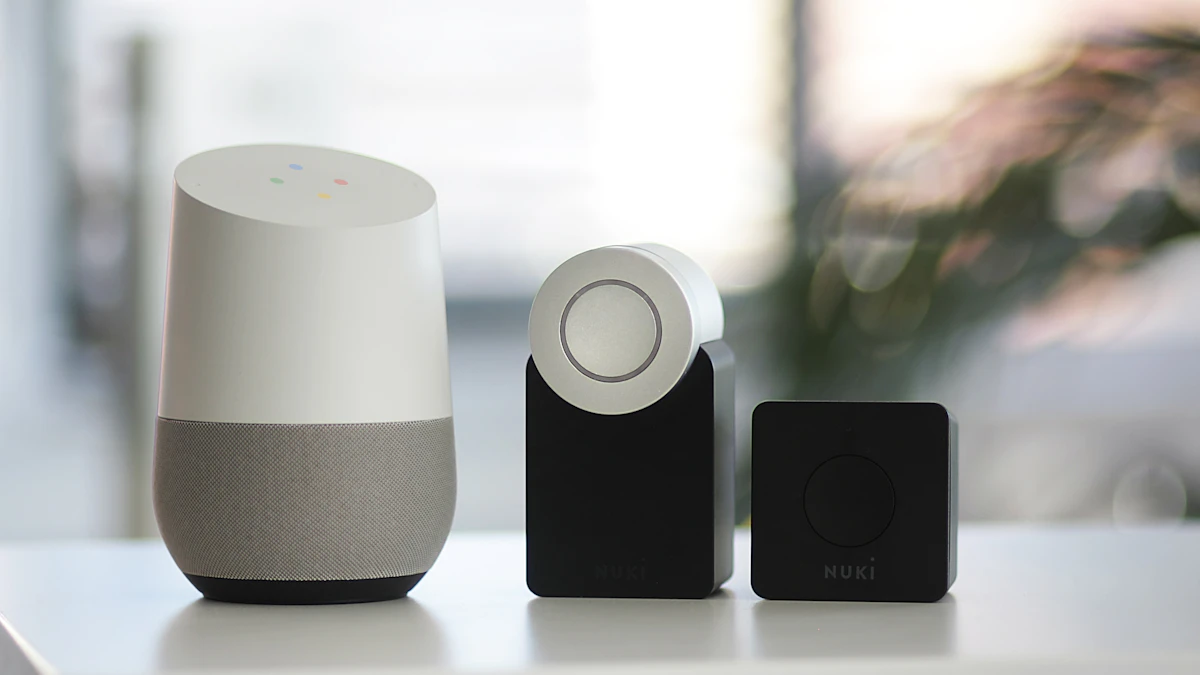
If AI worms do arrive, the most exposed devices are the ones people rarely think about. CBS News notes that smart home gadgets and internet connected security cameras tend to have weaker protections than phones or laptops. Off brand streaming boxes, smart appliances and older routers often ship with default passwords and stop getting updates after a year or two.
Businesses with large fleets of connected devices, such as cameras, sensors and point of sale gear, face the same issue at a bigger scale. And AI companies are affected too, since stolen API keys are one of the routes Anthropic described.
What you can do now
None of this requires panic, but it is a good reason to tidy up your home network. These are standard security habits, not steps Anthropic prescribed:
- Update firmware. Turn on automatic updates for TVs, speakers, cameras and your router.
- Change default passwords. Any device still using its factory login is the easiest possible target.
- Retire unsupported gear. If a cheap streaming box or camera no longer gets updates, consider replacing it.
- Separate your devices. Many routers offer a guest network. Put smart home gadgets there, away from the laptop you use for banking.
- Turn off what you do not use. Remote access features and open ports you never touch only add risk.
If you are setting up connected gear for the first time, our smart home starter guide covers choosing devices from brands with good update records. For your accounts, our guide to protecting your online accounts in 10 minutes is a quick win.
What to watch next
Anthropic said, per CBS News, that the industry should work to "harden our systems to make it difficult for such replicators to spread" while also preparing for a world where they persist. Watch for three things:
- Whether other labs or independent researchers can repeat the results, especially with real passwords and security in place.
- Whether device makers and regulators respond with stronger update and password rules for cheap connected gadgets.
- How quickly new small open models improve at the multi step tasks that tripped them up in testing.
The warning also lands while governments debate how to oversee advanced AI, including the voluntary White House accord signed by AI leaders. For more coverage, visit our AI news section.
Frequently asked questions
What are AI worms?
AI worms are AI powered programs that can copy themselves from one device to another without human help. Anthropic's research looks at whether small AI models could do this across internet connected gadgets.
Has an AI worm actually been found in the wild?
No. Anthropic said it does not yet have a full rogue replicator. Its tests used a simulated network and made the hacking step easy on purpose.
Which devices are most at risk?
Cheap, poorly secured devices with internet access, such as off brand Android TV boxes, smart appliances and security cameras, are the likeliest targets because they often run outdated software.
How can I protect my smart home?
Keep firmware updated, change default passwords, replace devices that no longer get updates and put smart gadgets on a separate guest network.
Share this story
Spotted an error? Tell us