Key takeaways
- Coinbase no longer lets US customers link new credit cards, and Kraken supports only debit cards for US clients.
- If your issuer codes a bitcoin buy as a cash advance, expect a fee of around 3% to 5% and interest that starts on the purchase date with no grace period.
- In our worked example, a $500 bitcoin purchase on a credit card costs about $57 extra after one month, so the price must rise over 11% just to break even.
In this story 7 sections
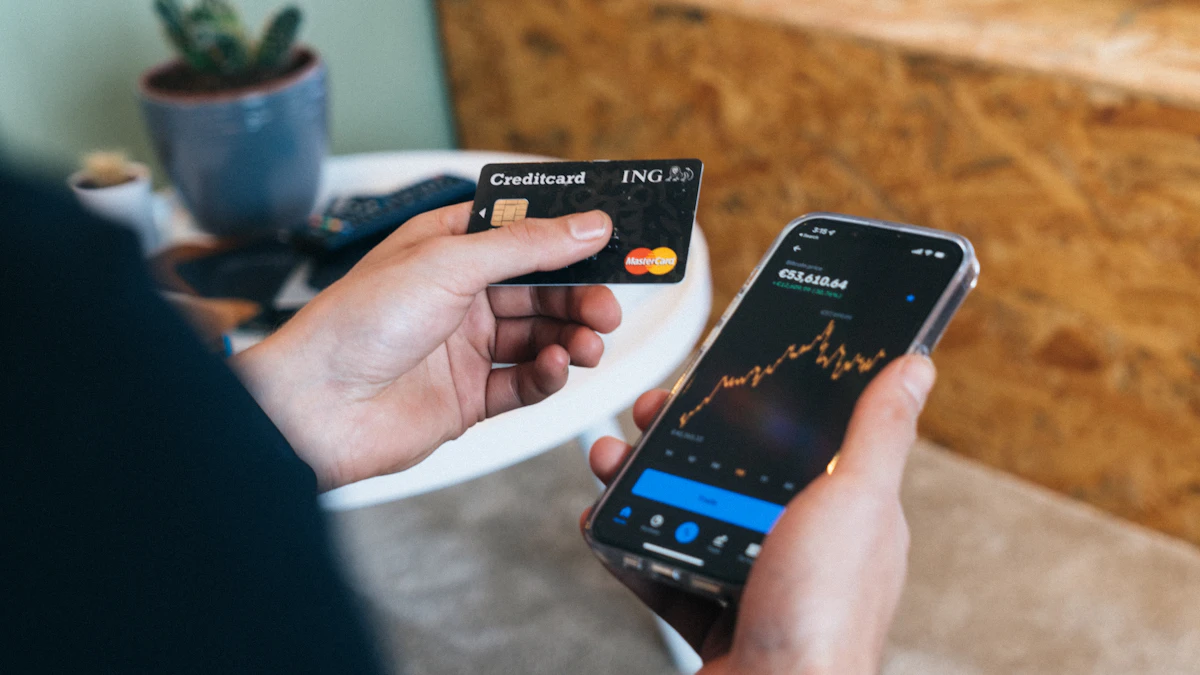
If you are trying to figure out how to buy bitcoin with a credit card, the first surprise is how few places in the US will let you, and the second is what it costs when one does. A card purchase can stack an exchange fee, a cash advance fee and interest that starts the same day. Here are the numbers that matter, followed by one purchase worked out to the cent.
- 0 new credit cards accepted at Coinbase, which says it no longer supports linking them.
- US debit cards only at Kraken, whose help center says credit cards are not supported for US clients right now.
- $0.25 + 3.75% is Kraken's posted fee for a US debit card deposit, a useful benchmark for what card funding costs at an exchange.
- 3% to 5% is the typical cash advance fee, according to NerdWallet, if your card issuer codes the purchase as a cash advance.
- 0 days of grace period on a cash advance. The CFPB says interest generally starts on the transaction date.
- 22.36% was the average APR on credit card accounts that were charged interest in August 2026, per the Federal Reserve. Cash advance rates are usually higher.
- 72 hours is the withdrawal hold Kraken may place after a card purchase.
Why the big US exchanges say no to credit cards
Start with availability, because it shapes everything else. Coinbase's payment methods page for US customers says it no longer supports linking new credit cards and adds that some card issuers block crypto purchases even on cards that are already linked. It points people to a debit card or a bank account instead.
Kraken is just as direct. Its card purchase help article says only debit cards are supported for US clients at this time, while some non US clients can use credit cards.
So searches like "how to buy bitcoin with a credit card on Coinbase" mostly end in a dead end. The places that do still accept credit cards tend to be smaller brokers, wallet apps that pass you to a third party payment processor, or peer to peer sellers. That is also where the costs get harder to see, and where offers of "no verification" or "no KYC" card purchases show up. Treat those as a warning sign, not a feature. Our guide on how to spot a crypto scam covers the patterns.
What the card fee at the exchange really means
Even a debit card is not cheap. Kraken's deposit fee table lists $0.25 plus 3.75% for a US debit card. On a $200 purchase, that is $7.75 before you own a single satoshi. Kraken also caps card buys with a $10 minimum and a rolling seven day limit it lists as $1,000 to $5,000, and it notes that limits change over time.
Platforms that do accept credit cards often charge more for them than for bank transfers. NerdWallet gave one example from the exchange Coinmama, which added a 5% fee on top of its normal fee for credit card buys. Check the confirmation screen for the total before you tap buy, since card purchases are generally final once they go through.
The cash advance fee your bank may add
This is the number most people miss, because it does not come from the exchange. It comes from your card issuer.
Many issuers treat a crypto purchase like cash taken out at an ATM, which means it is billed as a cash advance rather than a normal purchase. NerdWallet puts the typical cash advance fee at 3% to 5% of the amount. Kraken's own help page warns that card issuers may add fees such as cash advance charges beyond what Kraken collects.
The CFPB explains that a cash advance fee may be a flat amount or a percentage, depending on your card terms. Many cards also set a separate, lower cash advance limit than your normal credit line, so a large buy can be declined even when you have room on the card.
There is one more quiet cost here: cash advances usually earn no rewards. If the plan was to collect points on a big bitcoin buy, that plan probably does not work.
Interest from day one, and why 22.36% is the low estimate
On a normal purchase you can avoid interest by paying the full statement balance by the due date. A cash advance does not get that break. The CFPB's grace period explainer says that for a cash advance you generally start paying interest as of the date of the transaction.
The rate is also higher. The Federal Reserve's G.19 release shows an average APR of 22.36% on credit card accounts that were assessed interest in August 2026. That figure covers ordinary balances. The CFPB says cash advances commonly carry a higher rate than purchases, and your statement lists the exact cash advance APR for your card. Look it up before you buy, because it is the number that keeps growing.
The 72 hour hold
Kraken says card purchases can trigger a temporary withdrawal hold of 72 hours, and that USD card buys may always be subject to it, not just the first one. In practice, you cannot move that bitcoin to your own wallet right away. If you planned to send it to a hardware wallet, factor in a three day wait. Our explainer on how crypto wallets work covers why that step matters.
A worked example: $500 of bitcoin on a credit card
Assume a platform accepts your credit card and charges a card fee equal to Kraken's posted debit card rate. Assume your issuer codes it as a cash advance with a 5% fee and a 28% cash advance APR (check your own statement for the real figures), and that you pay it off in 30 days.
- Exchange card fee: $500 × 3.75% = $18.75, plus $0.25 = $19.00. Total charged to the card: $519.00.
- Cash advance fee: $519.00 × 5% = $25.95.
- Daily interest rate: 28% ÷ 365 = 0.0767% per day.
- Interest for 30 days on $519.00: $519.00 × 0.000767 × 30 = $11.94.
- Total extra cost: $19.00 + $25.95 + $11.94 = $56.89.
That is 11.4% of the $500 you meant to invest. Bitcoin would have to rise more than 11% in a month just for you to break even. Keep the balance for six months instead of one and the interest alone climbs to about $73, assuming the rate stays put and you make no payments.
Compare that with a bank transfer, which often has a lower fee or none at the exchange, and no issuer charges at all. Our main guide on how to buy bitcoin in the US walks through those cheaper funding options on the major apps.
When a credit card buy can still make sense
There are narrow cases. If your card issuer explicitly treats crypto as a regular purchase, charges no cash advance fee, and you pay the full balance before the due date, the exchange card fee may be the only extra cost. The only way to know is to call the number on the back of the card or read the cash advance section of your cardholder agreement, then confirm on your next statement how the charge was coded.
Borrowing at 20% or more to buy an asset that can swing sharply in a week is a different matter. If you can only buy bitcoin with credit, that is usually a sign to buy less, or to wait. And remember that any sale later on is a taxable event, which our guide to crypto taxes explains.
A quick final check before you buy with any card: open your latest statement, find the cash advance APR and fee, and run the five steps above with your own numbers. If the total surprises you, a debit card or bank transfer is waiting in the same app. More beginner guides are on our crypto page.
Sources
- Coinbase Help: Payment methods for US customers
- Kraken Support: Buying crypto with a Visa or Mastercard
- Kraken Support: Cash deposit options, fees and minimums
- CFPB: What is a grace period for a credit card?
- CFPB: Can I withdraw money from my credit card at an ATM?
- Federal Reserve G.19 Consumer Credit release
- NerdWallet: Can I buy cryptocurrency with a credit card?
Share this story
Spotted an error? Tell us