Key takeaways
- A crypto exchange uses an order book and a matching engine to pair buy orders with sell orders for each trading pair.
- On a centralized exchange your coins usually sit in the company's wallets, and the SEC warns you may lose access if a custodian is hacked, shuts down or goes bankrupt.
- US exchanges generally count as money transmitters under FinCEN rules, which is why they register, run anti money laundering checks and verify your identity.
In this story 7 sections
A crypto exchange is a company that matches people who want to buy a digital asset with people who want to sell it, and usually holds the coins and cash for both sides while they trade. If you have ever bought bitcoin in an app, you have almost certainly used one, even if the app never used the word.
That simple answer to what is a crypto exchange hides a lot of moving parts. Knowing them helps you judge fees, spot weak platforms and decide where your coins should live after you buy.
How a crypto exchange matches buyers and sellers
Think of a farmers market with one clipboard at the entrance. Every seller writes down what they have and the lowest price they will take. Every buyer writes down what they want and the most they will pay. When a buyer's price meets a seller's price, the market manager shakes both hands and the deal is done.
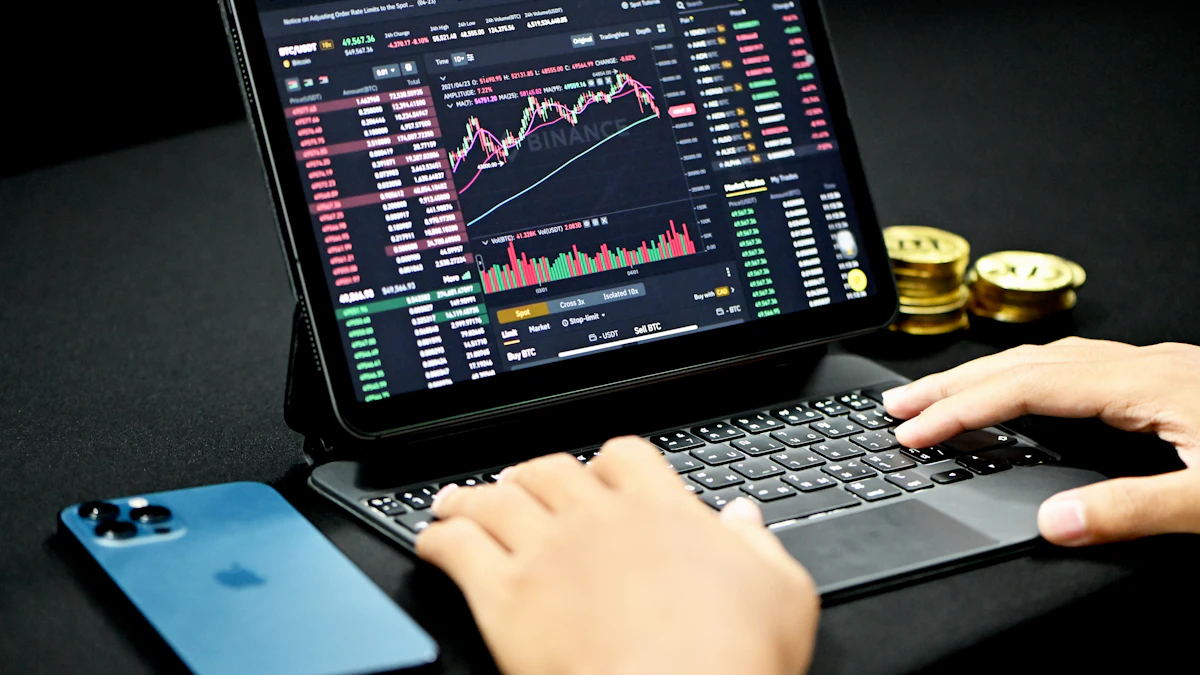
On an exchange, that clipboard is called the order book. It is a live list of open buy orders (bids) and sell orders (asks) for each trading pair, such as BTC to USD. The software that pairs them up is the matching engine.
There are two basic ways to place an order:
- Market order: you take whatever the best available price is right now. It fills fast, but the price can move against you on a big order.
- Limit order: you name your price and wait. It may fill later, partly, or not at all.
Many beginner apps hide the order book and show a single "Buy" button with a quoted price. Behind that button, the company is still trading against an order book or a pool of market makers, then adding its own spread or fee.
Where the coins actually sit
This is the part most people skip, and it matters most. When you buy on a centralized exchange, the coins usually stay in the exchange's wallets, not yours. The exchange keeps an internal ledger that says you own a certain amount. When you trade with another customer on the same platform, often no blockchain transaction happens at all. The exchange just updates two lines in its database.
The SEC's investor bulletin on crypto asset custody basics lists exchanges among third party custodians and warns that if a custodian "is hacked, shuts down, or goes bankrupt, you may lose access to your crypto assets." The same bulletin flags two practices to ask about:
- Commingling: holding many customers' assets together instead of separately.
- Rehypothecation: using customer deposits as collateral for the custodian's own purposes, such as lending.
Exchanges also split their holdings between hot wallets (online, used for quick withdrawals) and cold storage (offline, harder to steal from). The SEC notes that hot wallets are exposed to cyberthreats, while cold wallets are generally more secure from them but can be lost or damaged. If you want the full picture of the alternatives, our guide on how crypto wallets work walks through self custody.
How exchanges make money
Exchanges earn mainly from fees.
On order book platforms, you usually see maker and taker fees. Coinbase's help page on Advanced trading fees explains the split clearly. If your order sits on the book and someone else's order fills it, you are the maker. If your order fills instantly against orders already waiting, you are the taker. Taker fees on Coinbase Advanced are based on your trading volume over the trailing 30 days, and the tier is recalculated hourly. Makers typically pay less because they add liquidity.
Simple "Buy" screens often charge a spread, which is the gap between the price you pay and the market price, plus a flat or percentage fee. Then there are funding fees for card purchases, and network fees when you withdraw coins to an outside wallet. Our breakdown of how to avoid crypto fees covers ways to keep those costs down.
Centralized versus decentralized exchanges
Everything above describes a centralized exchange (CEX): one company runs the order book, holds the assets, checks your ID and answers support tickets.
A decentralized exchange (DEX) works differently. There is no company holding your funds. You connect your own wallet, and smart contracts swap tokens directly, often using liquidity pools instead of an order book. You keep control of your keys, but you also lose the safety net of customer support, password resets and bank transfers. We compare the two in detail in DEX vs CEX.
Rules US exchanges have to follow
In the US, a business that exchanges convertible virtual currency for cash or other currency is generally treated as a money transmitter. FinCEN laid this out in its 2013 virtual currency guidance, noting that money services businesses have registration requirements and anti money laundering, recordkeeping and reporting duties.
That is why a US exchange asks for your name, address, date of birth and often a photo ID before you can trade. Many states add their own money transmitter licenses on top, and New York has its own BitLicense regime. An exchange that skips identity checks entirely for US customers is a warning sign, not a perk.
Limits and common myths
Myth: "My crypto on an exchange is insured like a bank account." Not necessarily. Some exchanges hold customer cash in partner banks or carry insurance against certain losses, but the terms vary by company and rarely cover everything. The SEC suggests asking any custodian directly whether it insures against loss or theft and what happens if it fails.
Myth: "The price on my app is the price of bitcoin." Each exchange has its own order book, so prices differ slightly from one platform to the next.
Myth: "If it is in the app store, it is a real exchange." Fake trading platforms are one of the most common crypto scams. They show invented balances that grow nicely until you try to withdraw. Our guide to spotting a crypto scam lists the tells.
Limit: exchanges can freeze withdrawals during outages, hacks or investigations. When that happens, your coins exist on paper but you cannot move them until the company lets you.
What to do with this
Before you open an account, run through a short check:
- Confirm the company is registered to serve customers in your state. Legit exchanges list their licenses on a legal or disclosures page.
- Find the fee schedule and note both the trading fee and the withdrawal fee for the coin you plan to buy.
- Search the user agreement for words like "custody," "lend" and "bankruptcy" to see how your assets are held.
- Turn on two factor authentication with an authenticator app, not just text messages.
- Decide upfront how much you will leave on the exchange and how much you will move to your own wallet.
If you are ready to make a first purchase, our step by step guide on how to buy bitcoin compares the main US apps. You can find more explainers in our crypto section.
One last habit worth keeping: every few months, log in and do a small test withdrawal. It confirms your access still works and reminds you that the coins are only fully yours once they leave the exchange.
Sources
Share this story
Spotted an error? Tell us