Key takeaways
- RWA.xyz showed about $40.91 billion in tokenized real world assets outside stablecoins on November 21, 2026, led by Treasury funds and gold tokens.
- SEC staff said in January 2026 that a token format does not change how federal securities laws apply to a stock or bond.
- Third party tokenized stocks may not give holders any shareholder rights and can expose them to the issuing firm's bankruptcy risk.
In this story 9 sections
- What does tokenization of real world assets mean in plain English?
- How does a real asset end up as a token on a blockchain?
- What are some examples of tokenized real world assets?
- How big is the tokenized RWA market right now?
- Is a tokenized stock the same as owning the stock?
- Are tokenized real world assets regulated in the US?
- What are the risks of tokenizing real world assets?
- What is the difference between tokenization and a regular crypto coin?
- How can you check a tokenized asset before buying?
Tokenization of real world assets means recording ownership of something that exists off the blockchain, like a Treasury bill, a gold bar or a share of stock, as a digital token on a blockchain. The token is a claim. The value comes from the thing behind it, not from the code. That one idea explains most of what follows, including why some tokens give you real ownership rights and others give you almost none.
What does tokenization of real world assets mean in plain English?
It means turning a right to an asset into a token that can be held in a crypto wallet and moved on a blockchain. The "real world asset" (often shortened to RWA) can be a government bond fund, a commodity, private credit, real estate or company stock.
Think of a coat check ticket. The ticket is not the coat, but whoever holds it can claim the coat. A token works the same way, except the ticket lives on a shared digital ledger and can change hands at any hour.
The Bank for International Settlements describes the bigger goal in its bulletin on the tokenisation continuum: putting claims on a common programmable platform so that transfers of money and assets can be automated through smart contracts. If you are new to that term, our guide to what a smart contract is covers the basics.
How does a real asset end up as a token on a blockchain?
Someone holds the real asset, and a token is issued that represents a claim on it. The usual sequence looks like this:
- An issuer, such as a fund manager or a specialized platform, buys or sets aside the underlying asset (for example, short term US Treasuries).
- A custodian holds that asset in the traditional financial system.
- The issuer creates tokens on a blockchain, each tied to a set share of the asset or fund.
- Smart contracts handle rules like who may hold the token, how transfers work and how income is paid out.
- When a holder redeems, the token is retired and the holder gets cash or the asset back, subject to the issuer's terms.
The important part is step 2. The blockchain records who owns the token, but it cannot see whether the gold is really in the vault or the bonds are really in the account. You are trusting the issuer and the custodian, just as you would with a traditional fund.
What are some examples of tokenized real world assets?
Tokenized US Treasury funds and tokenized gold are the most common examples today. According to the RWA.xyz market dashboard as of November 21, 2026, some of the largest products include:
- Ondo's USDY, about $2.4 billion
- USYC, about $2.0 billion
- Franklin Templeton's BENJI and iBENJI products, about $1.4 billion and $1.7 billion
- BlackRock USD Institutional Digital Liquidity Fund (BUIDL), issued through Securitize, about $1.5 billion
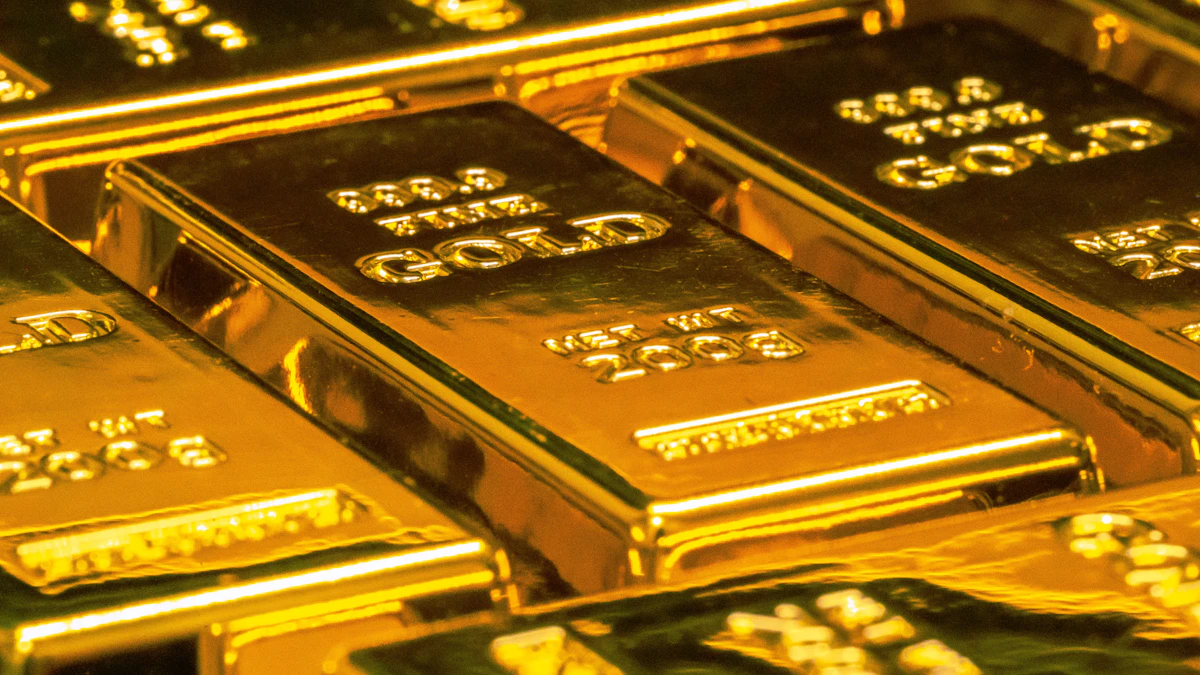
- Tether Gold (XAUT), about $2.7 billion, and PAX Gold (PAXG), about $1.6 billion
Tokenized stocks and private equity exist too, but they are much smaller so far. RWA.xyz lists categories for credit, real estate, stocks, private equity and venture capital, and active strategies alongside Treasuries and commodities.
Stablecoins such as USDT and USDC are technically tokenized dollars, and RWA.xyz tracks them separately because they are far bigger (about $273 billion combined across all stablecoins). Our explainer on how stablecoins stay at $1 covers that side.
How big is the tokenized RWA market right now?
About $41 billion, excluding stablecoins. RWA.xyz showed $40.91 billion in distributed asset value and roughly 5.87 million asset holders on November 21, 2026. It also counts a much larger $451 billion as "represented" value, a separate category it tracks apart from tokens that circulate freely in wallets.
The trend has been steep. Cointelegraph, citing DefiLlama data, reported in March 2026 that onchain RWAs had climbed about 66% since January 1, from roughly $14.1 billion to $23.6 billion. Different trackers count differently, so you will see figures that do not match. Compare numbers from the same source over time rather than mixing sources.
Ethereum holds the largest share by chain, about $14.3 billion on the RWA.xyz dashboard, followed by BNB Chain, Solana and Stellar.
Is a tokenized stock the same as owning the stock?
Not always, and this is the question worth getting right before you buy anything. In a January 28, 2026 staff statement, three SEC divisions split tokenized securities into two groups:
- Issuer tokenized: the company itself records its shares on a blockchain. The token is the security.
- Third party tokenized: an unaffiliated firm creates the token. This can be a custodial model, where the firm holds the real shares and the token is an entitlement to them, or a synthetic model, where the token only tracks the price.
The SEC staff warned that third party tokens "may or may not" give holders any rights as a holder of the underlying security. Synthetic versions, such as tokenized security based swaps, typically carry no voting or other shareholder rights. Holders can also face risks tied to the third party itself, such as its bankruptcy, that a direct shareholder would not face.
Real exchanges are starting to move here. We covered the NYSE plan for tokenized stocks on Avalanche if you want a current example.
Are tokenized real world assets regulated in the US?
Yes, when they are securities. The SEC staff statement says the token format "does not affect application of the federal securities laws." A share of stock is still an equity security whatever form it takes, and every offer and sale must be registered unless an exemption applies.
Two caveats matter. First, the statement is staff views, not a formal SEC rule, and it says so in a footnote. Second, tokenized commodities like gold tokens and tokenized dollars fall under different rules. Stablecoins, for example, have their own federal framework under the GENIUS Act.
What are the risks of tokenizing real world assets?
The main risks are trusting the issuer, unclear legal rights and the usual crypto security problems. In an October 2024 report for the G20, the BIS named the key risk areas as governance and legal frameworks, credit and liquidity risk, and custody and operational risk.
In practice, that looks like:
- Custody risk: the token is only as good as the proof that the asset exists and is held safely.
- Redemption limits: many products restrict who can redeem, set minimums or only allow redemptions on business days, even if the token trades around the clock.
- Eligibility rules: several large tokenized Treasury funds are open only to qualified or institutional investors, and some block US persons entirely.
- Smart contract and wallet risk: bugs, hacks and lost keys apply here just as they do with any token.
- Scams: the word "tokenized" gets attached to fake real estate and gold schemes. Our guide on how to spot a crypto scam lists the warning signs.
What is the difference between tokenization and a regular crypto coin?
A regular coin like bitcoin has no asset behind it, while a tokenized RWA is a claim on something outside the blockchain. Bitcoin's price comes from supply and demand for bitcoin itself. A tokenized Treasury fund's price should track the bonds it holds. That link to an outside asset is the whole point, and also the whole risk.
How can you check a tokenized asset before buying?
Start with five questions, and walk away if you cannot get clear answers:
- Who is the issuer, and is it registered with the SEC or another US regulator?
- Who holds the underlying asset, and is there an independent audit or attestation?
- Is the token issued by the asset's owner, or by a third party? If third party, is it custodial or synthetic?
- Can you redeem for cash or the asset, and on what terms?
- Are US investors allowed to hold it at all?
The tokens that answer all five well tend to come from large, regulated fund managers, and they are often limited to qualified buyers for now. For a retail investor, the most useful thing tokenization offers today is a clear view of where traditional finance is heading. Keep an eye on the SEC's next steps, since formal rules would decide how much of this reaches ordinary brokerage accounts. More plain English explainers live in our crypto section.
Sources
Share this story
Spotted an error? Tell us