Key takeaways
- Solana is a public blockchain launched in March 2020 that pairs a shared timekeeping system called proof of history with proof of stake to confirm transactions in under a second.
- Solana charges a base fee of 5,000 lamports per signature, with half burned and half paid to the validator, which works out to a fraction of a cent per transaction.
- People use Solana mainly for payments, stablecoins like USDC, trading and DeFi apps, NFTs and staking, but SOL has no maximum supply and new coins are issued each year as rewards.
In this story 5 sections
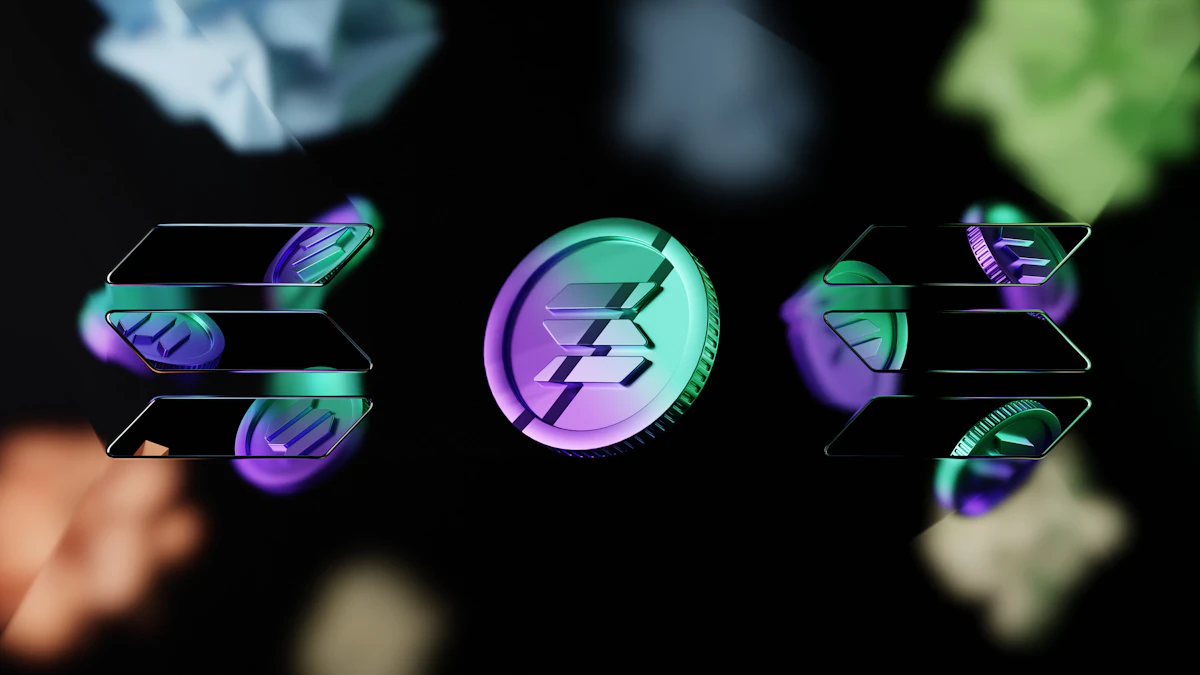
Solana is a public blockchain built to process transactions quickly and cheaply, and its native coin, SOL, pays the fees and helps secure the network. If you have been asking what is Solana and why people keep mentioning it next to Bitcoin and Ethereum, the short version is that it tries to work like a shared global computer that answers in under a second.
That speed is the whole pitch. Here is how it works, where you are likely to run into it, and what the hype tends to leave out.
Solana in one paragraph
Solana launched on March 16, 2020, according to Kraken's Solana guide, with Anatoly Yakovenko, Raj Gokal, Greg Fitzgerald and Stephen Akridge listed as founding members. Yakovenko came up with the idea in 2017 while working at Qualcomm. Two groups support it today: Solana Labs builds tools and software, and the Solana Foundation, a nonprofit in Zug, Switzerland, focuses on adoption and security. Like Ethereum, Solana runs apps on top of the chain instead of only moving one coin around. If the word blockchain itself is still fuzzy, our explainer on what a blockchain is covers the basics first.
How Solana works, explained with a busy restaurant
Picture a restaurant kitchen where every cook keeps their own copy of the order book. In most blockchains, the cooks stop and agree on the order of tickets before anyone starts cooking. That agreement takes time.
Solana gives the kitchen a shared, tamper proof clock. Coinbase describes this proof of history as a way "to keep time between computers on a decentralized network without all the computers having to communicate about it." Because every order already carries a trusted timestamp, the cooks spend less time arguing about sequence and more time cooking.
The clock alone does not decide who is right. Solana pairs it with proof of stake. Validators lock up SOL as a security deposit, check transactions, and earn rewards plus a share of fees. Ordinary holders can delegate their SOL to a validator and share in the rewards without running any hardware. The official Solana overview says the network has over 1,000 validators worldwide and that they reach consensus in less than a second.
What a transaction costs
Fees are tiny by design. Solana's fee documentation sets a base fee of 5,000 lamports per signature (a lamport is the smallest unit of SOL, the way a cent is to a dollar). Half of that base fee is burned and half goes to the validator. You can also add an optional priority fee during busy periods, and that goes entirely to the validator. In dollar terms, Solana's own site says fees typically cost about $0.00025.
Where apps live
Apps on Solana are called programs, which is Solana's word for smart contracts. Developers usually write them in Rust, often with a framework called Anchor. One detail sets Solana apart: programs hold no data of their own. Balances and app data sit in separate accounts, and each account must keep a small refundable SOL deposit, sized to how much data it stores, to stay on the chain.
What Solana is used for
This is the question most people actually type into Google, so here are the places you are most likely to meet it:
- Payments and transfers. Low fees make it practical to send small amounts, and Solana Pay lets merchants accept crypto directly.
- Stablecoins. Dollar pegged tokens such as USDC run on Solana, which makes it a popular route for moving digital dollars. Our guide to how stablecoins work explains what backs them.
- Trading and DeFi. Decentralized exchanges, lending apps and yield products are a big share of activity on the network.
- NFTs and digital collectibles. Cheap minting helped Solana become a home for art and gaming items.
- Games and community apps. Token gated groups and voting on community decisions both run on the chain.
- Staking SOL. Many holders stake their coins through an exchange or wallet to earn network rewards.
To use any of this, you need a wallet that supports Solana. Your coins never live inside the app itself, which is worth understanding before you start. See how crypto wallets work for the difference between keeping your own keys and leaving coins on an exchange.
Limits and common myths
"Solana is a company." It is not. Solana Labs and the Solana Foundation support the network, but the chain itself is run by independent validators around the world. Buying SOL is not buying shares in either group, even if search results sometimes call it "Solana stock."
"There is a fixed supply, like Bitcoin." Kraken notes that Solana has no maximum token supply. New SOL is issued each year as staking rewards. Inflation started at 8% a year and falls by 15% every two years until it settles at 1.5%, according to the same guide. Burning half of every base fee offsets some of that new supply.
"It handles millions of transactions per second." Big theoretical numbers get repeated a lot. Treat them as lab ceilings rather than what the network does on an ordinary Tuesday. Real throughput depends on demand and on the software validators run.
"Fast means flawless." Speed and reliability are separate questions. Keeping a busy, fast chain stable is ongoing engineering work, and you can see live network health on the official Solana status page before you move money. Our report on the Alpenglow upgrade covers the latest change to how validators agree on blocks.
"Low fees mean low risk." A cheap transaction can still send money to a scam. Fake token airdrops and copycat apps are common on every popular chain, Solana included.
What to do with this
If you only wanted to know what SOL is, you now have the core idea: a fast, low fee blockchain where SOL pays for transactions and secures the network through staking. If you are thinking about buying some, start small, use a well known US exchange, and read up on buying Solana and other altcoins before you place an order. Prices swing hard, so put in only money you could stand to lose.
One last check before you move any SOL: confirm that the wallet address and the network both say Solana. Sending SOL on the wrong network is one of the easiest ways to lose it, and fast confirmation means there is very little time to notice a mistake. For more plain English explainers, browse our crypto section.
Sources
Share this story
Spotted an error? Tell us