Key takeaways
- Samsung lists the Galaxy Z Fold8 at $1,899.99 and the Z Flip8 at $1,199.99, while the Pixel 10 Pro Fold starts at $1,799 and the iPhone Duo at $1,999.
- Samsung rates its 2026 foldables IP48 and says none of its foldables are dust resistant, while the Pixel 10 Pro Fold and iPhone Duo carry IP68 ratings.
- Samsung advises owners not to remove the inner screen protector or add adhesive protectors, and to visit an authorized service center if it needs replacing.
In this story 9 sections
- Are foldable phones worth it in 2026?
- Are foldable phones durable enough for daily use?
- Do foldable phones break easily?
- Do foldable phones still have a crease?
- Are foldable phones waterproof?
- Do foldable phones have screen protectors?
- Do foldable phones have cases?
- How long do foldable phones last?
- Who should buy a foldable phone, and who should wait?
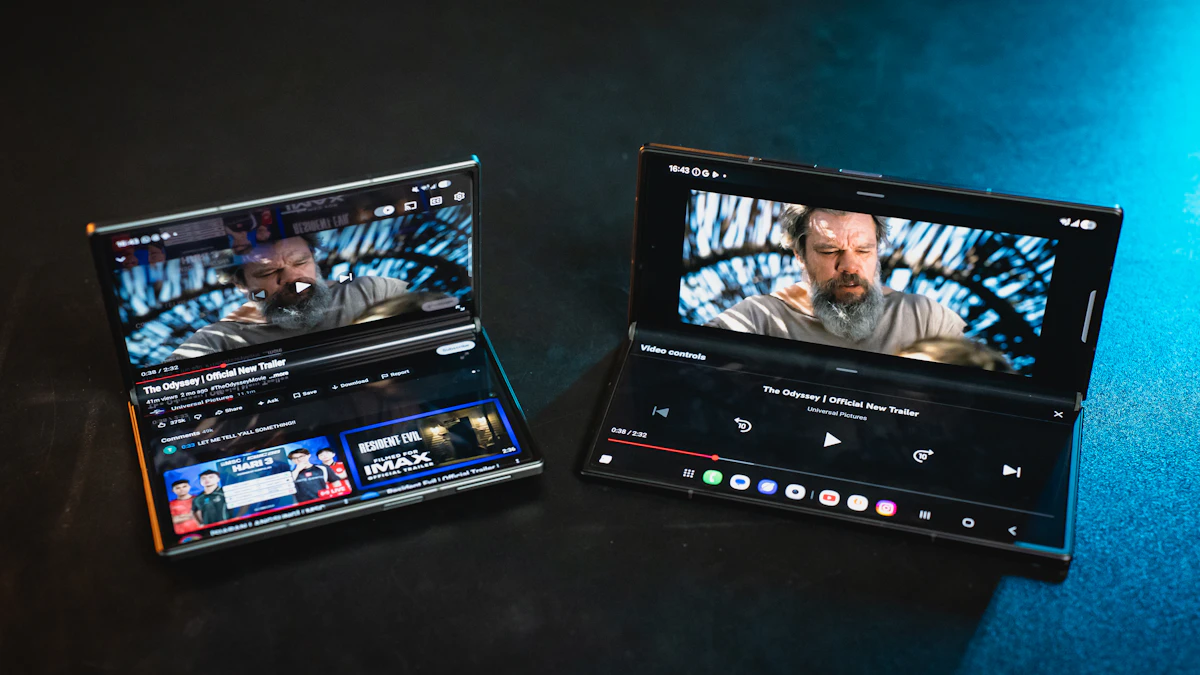
A foldable phone now costs anywhere from about $1,200 to more than $2,000, and Samsung, Google and now Apple all sell one in the US. Apple joined in October with the iPhone Duo. So the question is no longer whether foldable phones work. It is whether one makes sense for you, given the price, the care they need and how long you plan to keep it. Below are straight answers to the questions people search most, based on manufacturer spec pages and support documents.
Are foldable phones worth it in 2026?
For most people, a foldable phone is worth it only if you will use the big inner screen every day. If you read, edit documents, run two apps side by side or watch video on the go, the extra screen changes how you use a phone. If you mostly text, scroll and take photos, a regular flagship gives you the same experience for less money and less worry.
Price is the biggest hurdle. Samsung's July 2026 launch announcement lists the Galaxy Z Fold8 at $1,899.99, the Fold8 Ultra at $2,099.99 and the flip style Z Flip8 at $1,199.99. Google's Store lists the Pixel 10 Pro Fold from $1,799, and Apple's iPhone Duo opened pre-orders at $1,999. That is a lot to pay for a device that also asks more of you in daily care.
There is a middle path. Flip style phones like the Z Flip8 fold a normal size phone in half, so you get a pocketable device without paying book style prices. You do not get a tablet sized screen, though, so the main reason to buy a foldable is weaker.
Are foldable phones durable enough for daily use?
Yes, current models handle normal daily use, but they are still more fragile than a slab phone in a few specific ways. The hinge and the soft inner screen are the weak points. Samsung's own care guide for foldable phones warns against pressing the main screen with a fingernail or pen, folding the phone with a card, coin or key between the halves, and folding it backward.
The inner display uses a flexible plastic top layer rather than the hard glass on a regular phone's front. That layer scratches more easily and can dent under a sharp point. The outer screen, on the other hand, is ordinary cover glass and holds up like any other phone.
Launch problems still happen. Within hours of the iPhone Duo going on sale, some owners reported inner screens cracking along the hinge. One early report does not mean a design is flawed, but it is a reminder that first generation foldables carry more risk than a mature model.
Do foldable phones break easily?
They do not break easily if you treat them as the precise devices they are, but small mistakes cost more. A pocket of sand, a key in the fold or a hard press on the inner screen can do damage that would not hurt a regular phone. Drops are also riskier, since replacing a cracked inner panel is a costly repair.
That is why many buyers pair a foldable with an extended warranty or carrier protection plan. Check the deductible for screen damage before you decide, because foldable screen claims can cost more than they do on standard phones.
Do foldable phones still have a crease?
Yes, every book style and flip style foldable sold in the US still has some visible crease on the inner screen. How noticeable it is varies by model and by lighting. You tend to see it at an angle or on a white background, and you feel it when you swipe across the middle. Whether you get used to it is personal, so if a faint line would bother you every day, try one in a store first.
Samsung's care page also notes that a small gap at the edges when the phone is closed is normal, and that the open screen can sit slightly off perfectly flat. Both are part of how the hinge is built, not defects.
Are foldable phones waterproof?
No foldable is waterproof, but most new ones are water resistant, and the dust story differs by brand. Samsung rates the Z Fold8, Fold8 Ultra and Z Flip8 at IP48, which in Samsung's words means resistance in up to 5 feet of fresh water for up to 30 minutes. The 4 in IP48 is a modest rating against solid particles, and Samsung's support page says plainly that none of its foldables are dust resistant and that it does not advise beach or pool use.
Google and Apple went further. The Google Store page for the Pixel 10 Pro Fold describes it as Google's first foldable with IP68 dust and water resistance, and Apple's iPhone Duo spec page lists IP68 to a depth of 6 meters for up to 30 minutes. Apple adds that resistance can decrease with normal wear, which applies to every phone.
If you spend time at the beach, on job sites or anywhere dusty, the IP68 models are the safer choice.
Do foldable phones have screen protectors?
Yes, foldables ship with a protective layer already applied to the inner screen, and you should leave it alone. Samsung says it does not recommend removing that layer and that damage from removing it yourself is not covered by its standard warranty. If it starts to peel or bubble, Samsung directs owners to an authorized service center for a replacement, which may carry a cost.
Do not stick an ordinary screen protector on the inner display either. Samsung specifically warns against adding adhesive protectors or stickers to the main screen. For the outer screen, a normal protector made for your exact model is fine.
Do foldable phones have cases?
Yes, and a case is worth buying, though it works differently. Most foldable cases come in two pieces, one for each half, and some attach with adhesive rather than a simple snap fit. Early iPhone Duo owners were surprised to find that Apple's own case uses adhesive strips. A case protects the frame and back from drops, but it cannot cover the inner screen, so careful folding habits still matter.
How long do foldable phones last?
A foldable can last as long as a regular flagship on the software side, and hinge life is less of a worry than it once was. Google promises seven years of OS and security updates for the Pixel 10 Pro Fold. Samsung's Fold8 and Flip8 pages promise up to seven OS upgrades along with security updates, though timing can vary by carrier and market.
The practical limits are battery wear and the inner screen. A battery replacement is routine on any phone. An inner screen replacement out of warranty is a major cost, so the real lifespan of a foldable depends on whether it stays free of damage or whether you carry coverage that pays for repairs.
Who should buy a foldable phone, and who should wait?
A foldable makes sense if you will use the larger screen daily and are comfortable paying a premium for it. It also suits people who want a smaller phone in the pocket without giving up screen size, which is where flip models shine.
It is worth waiting if you are rough on phones, work around sand or grit, or want the lowest cost per year of ownership. It is also sensible to skip first generation models such as the iPhone Duo until early reports settle. Our guide on how to choose a smartphone covers the features that matter for any phone, and our iPhone vs Samsung comparison helps if you are deciding between ecosystems first.
One final check before buying: hold the phone open and closed in a store, run a finger across the crease, and slide it into the pocket you actually use. Ten minutes with a real unit will tell you more than any spec sheet. For more phone and device coverage, browse our gadgets section.
Sources
Share this story
Spotted an error? Tell us