Key takeaways
- SEC staff said in a February 2025 statement that typical memecoins are not securities, so buyers get no protection from federal securities law.
- A rug pull happens when a token's creators or insiders cash out and leave other holders with a coin that can no longer be sold for real value.
- The IRS treats memecoins as property, so selling or swapping them must be reported and can create a taxable capital gain or loss.
In this story 10 sections
A memecoin is a crypto token built around a joke, a character, a viral moment or an internet trend, and its price depends almost entirely on how many people want to buy it next. There is usually no product, no revenue and no company behind it, which is the short answer to what is a memecoin and also the reason it is so risky.
This guide answers the questions people actually ask about memecoins, using what US regulators have published. It is not investment advice. For broader background, our crypto section covers the basics.
What is a memecoin in crypto?
In crypto, a memecoin is a token whose main selling point is its theme and its online community rather than any use. The SEC's Division of Corporation Finance described meme coins in a February 2025 staff statement as crypto assets inspired by memes, characters, current events or trends, where the promoter tries to build an enthusiastic online community that buys and trades the coin.
The same statement notes that people tend to buy them for entertainment, social interaction and cultural reasons, that their value is driven mostly by demand and speculation, and that they usually have limited or no functionality. The staff compared them to collectibles.
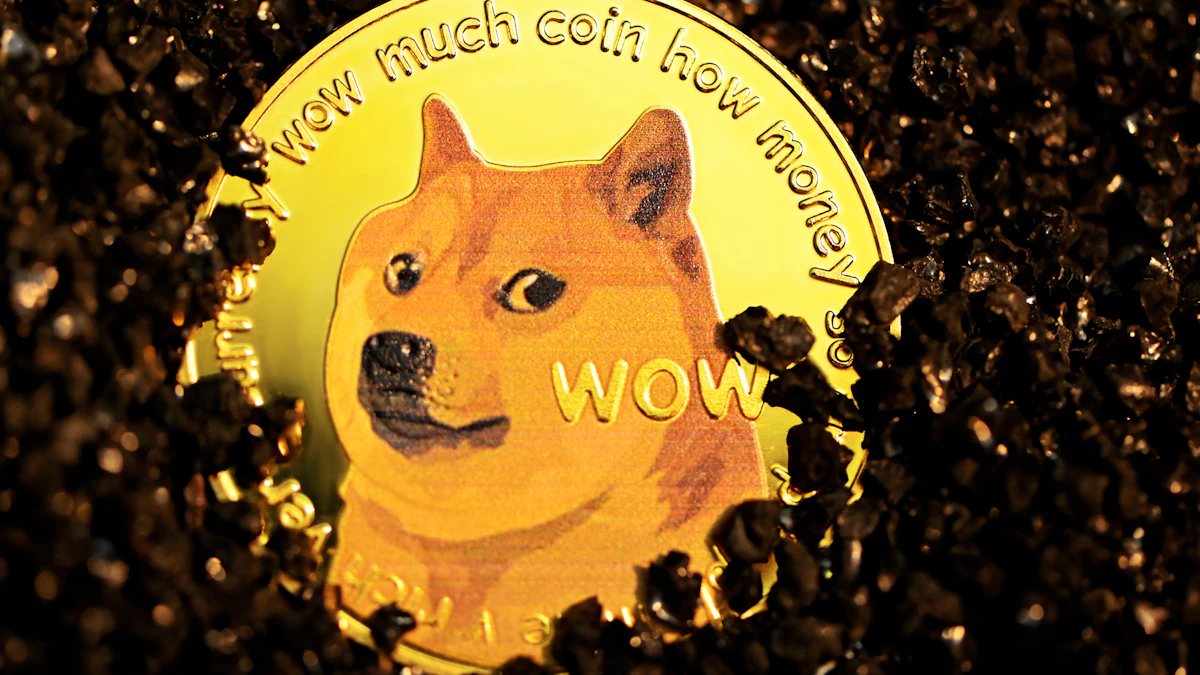
Dogecoin is the best known example, and we explain its history in what Dogecoin is and how it works. Most newer memecoins are not separate blockchains at all. They are tokens issued on an existing network, the same way thousands of other tokens are.
How does a memecoin work?
A memecoin works like any other token: a smart contract on a blockchain records who holds how many units, and people trade those units on exchanges or through a crypto wallet. What makes it a memecoin is the story wrapped around it.
The usual life cycle looks like this:
- Someone creates the token, picks a name and ticker, and sets a supply, often in the billions or trillions so each unit costs a fraction of a cent.
- The creator adds the token to a trading pool so others can buy it.
- Promotion starts on social media, chat groups and forums. Early buyers have a reason to spread the word, because new buyers push the price up.
- If attention grows, prices can jump very fast. When attention fades, buyers disappear and the price can collapse just as quickly.
Because there are no earnings or cash flows to anchor the price, the only thing holding it up is the next buyer. To hold or trade any token you need a wallet, and our explainer on how crypto wallets work covers what you are actually controlling when you hold one.
What is a memecoin used for?
Mostly, a memecoin is used for speculation and community fun. Some projects promise future features, games or rewards, but the typical memecoin has no use beyond being bought, held and sold.
The SEC staff statement lists the kind of disclaimers memecoin projects often publish themselves: buyers should not expect a return, nobody will work to make the coin more valuable, the coin has no use, and buyers may lose all their money. Many projects literally say the coin is for entertainment purposes only. Read those lines as the most honest part of the website.
Are memecoins securities in the US?
According to SEC staff, the typical memecoin is not a security under federal securities law, which means sellers do not have to register it and buyers are not protected by those laws. The staff reasoned that a memecoin does not pay a yield or give holders rights to a business's income or assets, and that its value comes from speculative trading and market mood rather than the work of a company.
There are important limits. The statement is a staff view with no legal force, and it does not cover products that are labeled memecoins as a disguise for what is really a securities offering. The SEC said it would look at the economic reality of each case. It also pointed out that fraud tied to memecoins can still be pursued by other federal and state agencies under other laws. You can read the full SEC staff statement on meme coins.
What is a memecoin rug pull?
A rug pull is when the people behind a token cash out and abandon it, leaving every other holder with a coin nobody will buy. It is one of the most common ways memecoin buyers lose money.
It can happen in a few ways. The creator may pull the money out of the trading pool so the token can no longer be sold for anything of value. Insiders who got huge allocations at launch may dump them all at once. In some cases the contract itself is written so ordinary holders cannot sell at all.
A close cousin is the pump and dump, where a group hypes a coin, waits for outsiders to pile in, then sells into the rush. The FTC warns that only scammers guarantee profits or big returns, and that celebrity endorsements and glowing testimonials are easily faked. Our guide on how to spot a crypto scam walks through more warning signs.
What is a memecoin launchpad?
A memecoin launchpad is a website or app that lets almost anyone create a new token and start trading it within minutes, without writing code. That convenience is why new memecoins appear constantly. Anyone can copy a trending name, launch a look alike token and hope buyers confuse it with the original. Being on a launchpad says nothing about whether a coin is safe, fair or real.
What is a memecoin CA?
CA stands for contract address, the unique blockchain address of a token's smart contract. Two tokens can share the same name and ticker, but only one contract address belongs to the coin you meant to buy.
Scammers rely on this. They launch copycat tokens with the same name and spread their own address in replies and group chats. Before buying any token, people who trade memecoins compare the contract address against the project's official channels and a reputable block explorer. If you cannot confirm it, do not buy.
Why are memecoins so risky?
Memecoins are risky because their price has nothing underneath it except attention. When the crowd moves on, the price can drop close to zero with no floor.
A few specific reasons stack up:
- No legal protection. SEC staff said buyers of typical memecoins are not protected by federal securities law.
- No reversals. The FTC notes that crypto payments typically cannot be reversed and do not carry the legal protections a credit card offers.
- Extreme swings. The FTC also points out that crypto values can change by the hour, and a drop comes with no guarantee of recovery.
- Insider concentration. A small number of wallets often hold a large share of supply, so a few sellers can crash the price.
- Thin trading. With small or new coins, there may not be enough buyers to sell into when you want out.
If you do buy, treat it like money spent on a lottery ticket, not savings.
Do you pay taxes on memecoins?
Yes. The IRS treats digital assets, including memecoins, as property, not currency, and you must report digital asset transactions whether or not they produced a gain or loss.
If you hold a memecoin as an investment, selling or swapping it generally triggers a capital gain or loss, reported on Form 8949. Trading one memecoin for another counts too, not just cashing out to dollars. The IRS explains the rules on its digital assets page, and our crypto taxes explainer covers cost basis and record keeping in more detail.
Where do you report a memecoin scam?
Report memecoin fraud to the FTC at ReportFraud.ftc.gov, to the FBI's Internet Crime Complaint Center at ic3.gov, and to the exchange or wallet service you used to send the money. The FTC's guide to cryptocurrency and scams also lists the CFTC and SEC complaint portals.
Report even if you think the money is gone. Reports help agencies connect cases and spot repeat operators. And before your next purchase, try the simple check the FTC recommends: search the coin's name along with words like "scam" or "review" and see what comes up.
Sources
Share this story
Spotted an error? Tell us