Key takeaways
- Judge Debra M. Brown denied xAI's motion to dismiss in full on October 30, letting the NAACP's Clean Air Act claims proceed.
- The court held that turbines powering Colossus 2 are not exempt mobile sources under Mississippi's air plan, despite a 2025 state regulator letter.
- The NAACP's request for a preliminary injunction is still pending, and penalties of up to $124,426 per day per violation are sought.
In this story 4 sections
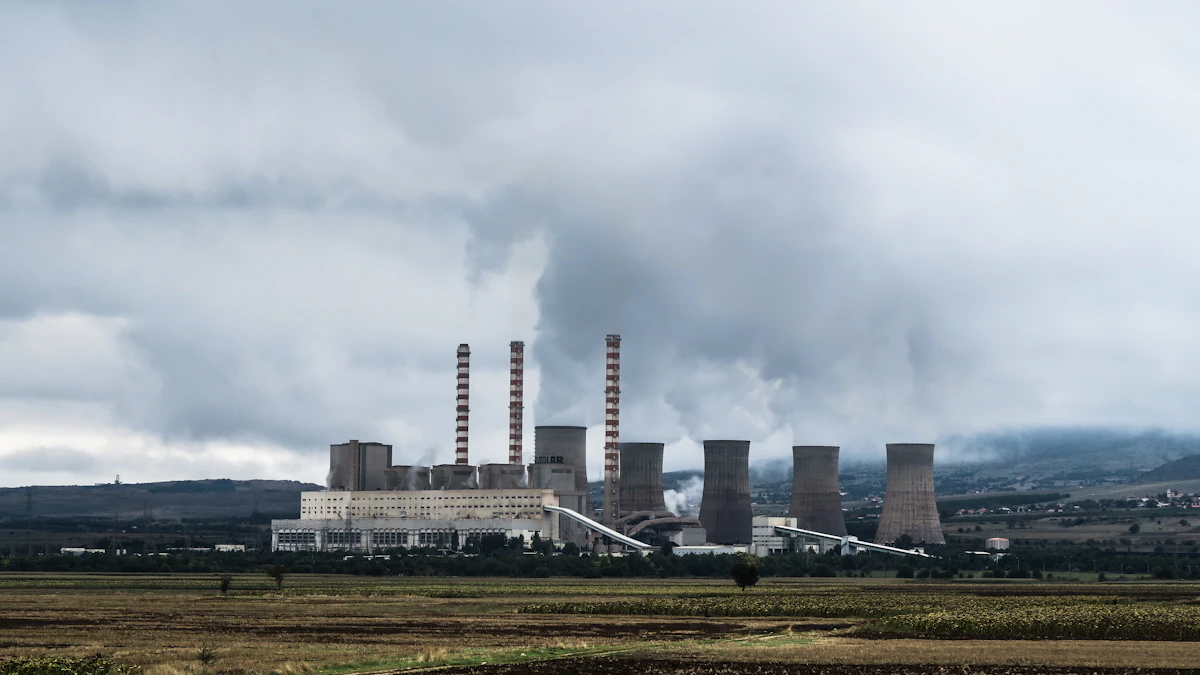
At least 27 natural gas turbines in a DeSoto County field are now the center of a federal case that xAI could not make go away. On October 30, U.S. District Judge Debra M. Brown denied the company's motion to dismiss, so the xAI NAACP lawsuit over the plant that powers its Colossus 2 data center will move forward in the Northern District of Mississippi.
The ruling does not decide whether xAI broke the Clean Air Act. It decides that the NAACP gets to try to prove it. For a company that has built AI compute faster than almost anyone, that is a meaningful speed bump, and it lands as data center power has become a political issue across the country.
How a temporary permit turned into a federal case
The dispute is about one word: mobile. Mississippi exempts mobile sources of pollution from the permit rules that apply to fixed power plants. xAI's position was that its turbines qualified. The NAACP's position was that dozens of large turbines feeding a data center are a power plant, whatever is bolted underneath them. Here is how the case got to this point, based on the court's opinion and order and filings described in it.
- July 29, 2025: The Mississippi Department of Environmental Quality writes to xAI that its turbines will count as mobile and be exempt from permitting, as long as each one stays on site for less than 12 months.
- August 1 to December 18, 2025: The turbines are installed at the site in Southaven, Mississippi. The plant supplies power to xAI's Colossus 2 facility in the Whitehaven area of Memphis, Tennessee.
- April 7, 2026: According to the order, at least 27 gas turbines are on site, with combined capacity of at least 495 megawatts.
- April 14, 2026: The NAACP and its Mississippi State Conference sue X.AI Corp. and MZX Tech LLC, a wholly owned xAI subsidiary, under the Clean Air Act's citizen suit provision.
- June 15, 2026: xAI files its motion to dismiss. Briefing wraps up in late July.
- Earlier in October 2026: A separate motion to dismiss filed by the Justice Department is denied, according to TechCrunch and Earthjustice.
- October 30, 2026: Judge Brown denies xAI's motion in full and writes that the plaintiffs' claims will proceed.
Why Judge Brown rejected the mobile source argument
xAI raised three main defenses: that the NAACP lacked standing to sue under the statute, that the turbines were exempt mobile sources, and that the citizen suit provision itself is unconstitutional. The court turned down all three.
On the central question, the judge looked at how Mississippi's own air plan borrows federal definitions. The state plan pulls in the federal meaning of "mobile source," and federal rules treat combustion turbines above a certain heat input as stationary equipment. Each of these turbines is well above that threshold, the order says, so they are not mobile sources under the state plan.
The state regulator's 2025 letter did not change that. The court said the letter did not control how the law applies, which matters for every company that has leaned on informal agency guidance to get power running quickly.
The constitutional argument also failed. xAI argued that letting private groups enforce the Clean Air Act intrudes on the executive branch. The court did not accept that, which keeps the citizen suit route open for this case.
What the NAACP says the plant puts into the air
The complaint, as summarized in the order, estimates the turbines' potential emissions at roughly 1,700 tons of nitrogen oxides, 580 tons of carbon monoxide, 180 tons of particulate matter and 19 tons of formaldehyde per year. The plaintiffs' lawyers at Earthjustice and the Southern Environmental Law Center put the figures higher in their own release, citing more than 5,000 tons of nitrogen oxides a year.
The groups want civil penalties of up to $124,426 per day per violation, an injunction, modern pollution controls and legal fees. The NAACP has also asked for a preliminary injunction, and the court has not ruled on that request yet, Earthjustice said.
TechCrunch reported that it contacted SpaceX for comment on the ruling. No response was included in its report.
Where the Colossus 2 fight goes from here
The case now moves into the merits, which means evidence about how the turbines were run, for how long and with what controls. The pending injunction request is the near term item to follow, since a ruling there could affect how the plant operates before any trial.
The bigger signal is for the rest of the AI industry. Companies racing to power new clusters have used temporary generation while they wait for grid hookups, and deals like the SpaceX GPU lease and OpenAI's plan to buy Google TPUs show how much hardware is still coming. Some firms are even looking off the planet, as with Google's satellite data center test. If temporary turbines can be challenged as permanent power plants, the cheapest shortcut to more compute just got harder to use.
For more coverage of how AI companies are being checked by courts and regulators, see our AI section. The next date that matters is whenever Judge Brown rules on the preliminary injunction.
Share this story
Spotted an error? Tell us