Key takeaways
- A 10,000 mAh Qi2 magnetic pack such as the Anker MagGo Power Bank 10K suits most iPhone 12 and later owners who want a battery that stays attached.
- Only some models, including iPhone 17, 17 Pro, 17 Pro Max and 16 Pro Max, accept 25W wireless charging, so a 25W pack is wasted on an iPhone 15 or older.
- The FAA requires power banks in carry on bags only and caps each lithium ion battery at 100 Wh without airline approval, which a 24,000 mAh pack stays under.
In this story 10 sections
- How we chose these power banks
- First, know what your iPhone can actually accept
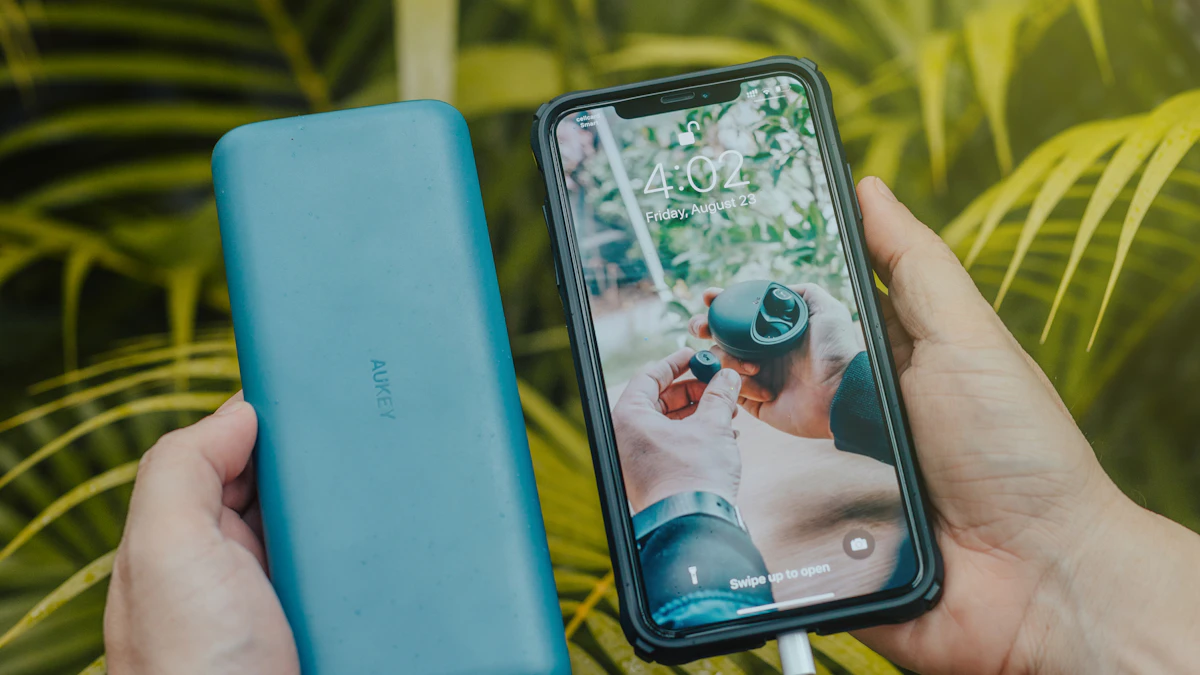
- Best for most iPhone owners: Anker MagGo Power Bank 10K
- Best for fast wireless charging on iPhone 16 and 17: UGREEN MagFlow Qi2 25W
- Best lightweight magnetic pick on a budget: INIU SnapGo Air
- Best for keeping in a pocket or bag: INIU P50 E1
- Best for travel and charging a laptop too: Anker 737 Power Bank (PowerCore 24K)
- Flying with a power bank: the 100 Wh rule
- What to skip
- A quick buying checklist
Your iPhone hits 15 percent at 4 PM and you still have a train ride, dinner and a late call ahead. The best power bank for iPhone owners in that spot is usually a 10,000 mAh magnetic pack that snaps onto the back, but it is not the right answer for everyone. Frequent flyers, people who also carry a laptop, and anyone on a tight budget will be better served by something else.
This guide sorts the options by need, so you can skip straight to the situation that sounds like yours.
How we chose these power banks
We did not test these batteries ourselves. The picks below come from published manufacturer specs, the store prices listed by each brand or retailer, and independent reviews, mainly the TechRadar power bank guide (updated October 2026) and the Yahoo Tech power bank roundup (May 2026). We then checked each pick against Apple's own charging guidance, because a power bank can only charge an iPhone as fast as that iPhone allows. Prices change often, so treat the figures below as a snapshot from November 2026.
First, know what your iPhone can actually accept
Two numbers matter more than anything printed on the box.
- Wireless speed. Apple's MagSafe charging page lists up to 25W for iPhone 17, iPhone 17 Pro, iPhone 17 Pro Max, iPhone 18 Pro, iPhone 18 Pro Max, iPhone 16 Plus and iPhone 16 Pro Max. iPhone 16 and 16 Pro top out at 22.5W, iPhone Air at 20W, and iPhone 17e plus iPhone 15 and earlier at 15W.
- Wired speed. Apple's fast charging page says iPhone 17 models reach about 50 percent in around 20 minutes with a 40W or higher adapter, while iPhone 17e and iPhone Air need 20W or more to hit 50 percent in about 30 minutes.
So a 25W magnetic pack is wasted on an iPhone 14, and a 15W pack will feel slow on an iPhone 17 Pro. Match the bank to the phone.
Best for most iPhone owners: Anker MagGo Power Bank 10K
Who it is for: anyone with an iPhone 12 or later who wants a battery that clicks onto the back and stays there.
Why it stands out: TechRadar named it the best magnetic power bank, and Yahoo Tech picked it as the best MagSafe style battery for iPhone. It holds 10,000 mAh, is Qi2 certified for 15W wireless charging, and offers 27W through its USB-C port when you want a faster wired top up. A fold out stand lets you prop the phone up for video on a plane tray table.
Downsides: at about 250 grams (8.8 ounces) it is heavier than reviewers expected, Yahoo Tech found the stand a little flimsy, and its wireless speed is capped at 15W even on newer phones that accept more.
Price at the time of writing: listed at $89.99 in TechRadar's October 2026 guide, with sales around $79.99 (November 2026).
Best for fast wireless charging on iPhone 16 and 17: UGREEN MagFlow Qi2 25W
Who it is for: owners of an iPhone 16 Plus, 16 Pro Max, any iPhone 17 model except the 17e, or an iPhone 18 Pro who want the magnetic convenience without the 15W ceiling.
Why it stands out: UGREEN's US store lists it with Qi2.2 support for up to 25W wireless and 30W wired over USB-C, at 254 grams. TechRadar called it the best compact fast charging pack. On a phone that accepts 25W, that is the quickest way to charge without a cable.
Downsides: TechRadar noted it can get a little warm, which is normal for fast wireless charging but worth knowing if you keep the phone in a tight pocket. On an iPhone 15 or older you are paying for speed your phone cannot use.
Price at the time of writing: $79.99 on UGREEN's US store, with a $69.99 offer shown (November 2026).
Best lightweight magnetic pick on a budget: INIU SnapGo Air
Who it is for: people who want a magnetic battery but balk at paying close to $90.
Why it stands out: INIU lists the SnapGo Air with Qi2.2 at up to 25W, and TechRadar recorded 45W wired output and a weight of 196 grams (6.9 ounces), making it lighter than both picks above. TechRadar gave it its "best cute magnetic" slot.
Downsides: the same reviewers point out that 10,000 mAh does not stretch to many full charges, so heavy users may still run dry on a long weekend.
Price at the time of writing: $54.99 on INIU's store (November 2026).
Best for keeping in a pocket or bag: INIU P50 E1
Who it is for: anyone happy to carry a short USB-C cable in exchange for a smaller, cheaper battery.
Why it stands out: TechRadar chose it as the best small power bank. It packs 10,000 mAh into about 160 grams, with up to 45W of output across two USB-C ports and one USB-A port. That is enough to fast charge an iPhone and still have a port free for earbuds or a watch charger.
Downsides: it is not magnetic, so the phone and battery dangle together on a cable. TechRadar also noted it will not reach top speed with every phone.
Price at the time of writing: $39.99 list in TechRadar's guide, which also showed it on sale for $24.98 (November 2026).
Best for travel and charging a laptop too: Anker 737 Power Bank (PowerCore 24K)
Who it is for: travelers who carry an iPhone plus a MacBook or iPad and want one battery for everything.
Why it stands out: TechRadar's pick for power users holds 24,000 mAh and can put out up to 140W, enough to charge a laptop, while still easily covering the 40W an iPhone 17 can accept over a cable. It stays within the carry on limit explained below.
Downsides: it weighs about 630 grams and is chunky, so it lives in a backpack, not a pocket.
Price at the time of writing: $109.99 in TechRadar's October 2026 guide (November 2026).
Flying with a power bank: the 100 Wh rule
The FAA's lithium battery guidance says power banks must travel in carry on bags only, never in checked luggage. If your carry on gets gate checked, take the battery out and keep it with you. Each lithium ion battery can be up to 100 watt hours (Wh), and you can bring up to two spares rated 101 to 160 Wh with airline approval. Airlines can also set their own limits on how many power banks you bring.
Many batteries list only mAh, so here is how to convert. Most lithium cells are rated around 3.6 to 3.7 volts, and the label usually prints the exact figure.
- Take the capacity: 24,000 mAh.
- Multiply by the cell voltage: 24,000 × 3.6 = 86,400.
- Divide by 1,000 to get watt hours: 86,400 ÷ 1,000 = 86.4 Wh.
That lands under 100 Wh, so a 24,000 mAh pack like the Anker 737 is fine without airline approval. A 30,000 mAh pack at 3.7 volts works out to 111 Wh, which would need approval. Always trust the Wh number printed on the case over your own math.
While you are at the airport, it is also worth knowing whether public charging stations are safe to use.
What to skip
- Lightning only batteries for newer phones. iPhone 15 and later charge over USB-C, so an older pack with a built in Lightning cable means carrying an adapter.
- Unbranded "magnetic" packs with no Qi2 certification. Without certification there is no promise the magnets align properly or that the pack manages heat safely.
- Huge 30,000 mAh bricks if you fly a lot. As the example above shows, they can cross 100 Wh and complicate check in.
- Paying for 25W wireless on an older phone. If you own an iPhone 15 or earlier, a 15W Qi2 pack charges just as fast for less.
A quick buying checklist
- Look up your iPhone's maximum wireless and wired speed on Apple's pages linked above.
- Pick magnetic if convenience matters, cable based if price and weight matter more.
- Choose 10,000 mAh for daily top ups and 20,000 mAh or more for multi day trips.
- Check the Wh rating on the case if you plan to fly.
- Make sure the bank has at least one USB-C port that supports USB Power Delivery.
If your iPhone runs down faster than it used to, a battery pack only treats the symptom. Check what your iPhone battery health numbers mean and try the fixes in our guide to an iPhone battery draining fast. And if the phone refuses to charge from any bank, work through why a phone stops charging before blaming the battery. More accessory advice lives in our gadgets section.
Sources
Share this story
Spotted an error? Tell us