Key takeaways
- Apple's October 31 release says Qwen will handle some Siri requests, power Compose in Writing Tools and support Visual Intelligence for users in mainland China.
- Testing starts with the iOS developer beta on November 4, and Chinese users get the features with iOS 27.3 in December, without the new Siri AI shown at WWDC 2026.
- Alibaba says Apple asks for consent before anything is sent to Qwen and that user requests and answers will not be used to train its models.
In this story 6 sections
Apple Intelligence in China finally has a launch window, and it comes with a partner many US readers did not expect. Apple said on October 31 that it is working with Alibaba so that Qwen, Alibaba's AI model family, will power parts of Siri, Writing Tools and Visual Intelligence for users in mainland China. Developers can test it from November 4, and the public rollout is set for iOS 27.3 in December.
The deal ends a long wait. Apple's AI features have been missing in China since they first shipped with iOS 18.1, while iPhone owners in the US and elsewhere have had them for two years. Here are the questions people are asking about the move, answered with what Apple and Alibaba have actually said.
What exactly did Apple announce about Qwen?
Apple published the news in a release on its Apple China newsroom. It says Apple has partnered with Alibaba to add Qwen support to some Apple Intelligence experiences, so Chinese users can call on Qwen directly inside three system features:
- Siri can pass certain requests to Qwen when the question needs broad world knowledge, and users can ask about photos and documents, including PDFs and presentations.
- Writing Tools gets a Compose option that uses Qwen to draft original text from scratch.
- Visual Intelligence can use Qwen for text and image understanding.
Users sign in with a Qwen account or with Sign in with Apple. The release does not name a specific Qwen model version, and it carries no executive quote.
On Alibaba's side, Global Times quoted Alibaba Group CEO Eddie Wu as saying Qwen "will draw on Alibaba's deep AI capabilities to integrate deeply into the various experiences of Apple's ecosystem."
Is this the same setup as ChatGPT in Siri in the US?
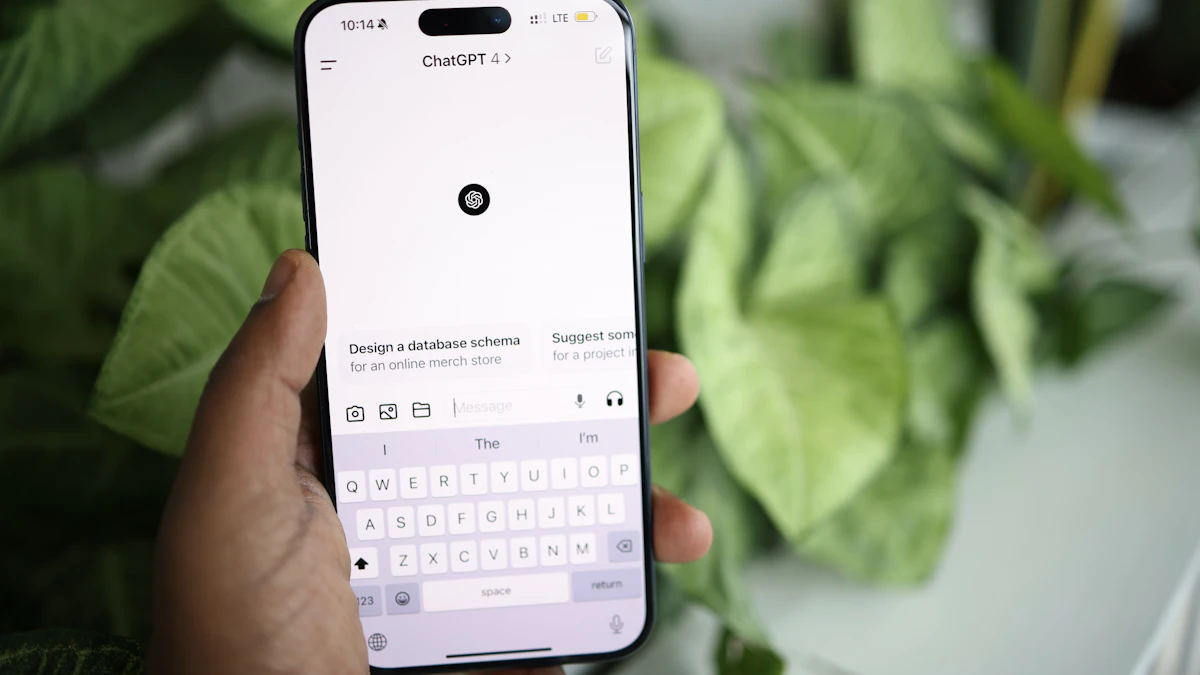
It looks similar in shape. In the US, Siri can hand some questions to ChatGPT, and many people already use OpenAI's app side by side with Apple's tools (our guide on using ChatGPT on iPhone covers that). In China, Qwen takes that outside model role instead.
The difference is how central it is. Apple's own on device features still do most of the routine work, but in China there is no OpenAI option at all, so Qwen is the only third party model wired into the system. An academic quoted by CGTN, Wang Xiaojie of Beijing University of Posts and Telecommunications, described it as the first time a top global hardware maker has used a Chinese large model as the main system level AI backbone in China.
Why did Apple Intelligence take so long to reach China?
China requires generative AI services to go through government registration, and foreign models face tight limits. Apple needed a local partner and regulatory sign off before it could ship anything.
The steps happened slowly. Reports that Apple was working with Alibaba and Baidu date back to early 2025. In July 2026, Reuters reported that Apple Intelligence had been registered with China's cyberspace regulator, as Engadget noted at the time. Global Times reports that earlier in October, China's Ministry of Industry and Information Technology approved integrating Alibaba's models into several Apple handsets. The October 31 announcement is the first time Apple itself has put dates on the launch.
Baidu was linked to the project in earlier reports, and a Baidu spokesperson told Reuters in July that it was involved in developing features. Apple's new release does not mention Baidu at all.
Which iPhones will get it, and who qualifies?
According to Apple, the supported devices are the iPhone 16 lineup and later, iPhone Duo, iPhone Air, and iPhone 15 Pro and 15 Pro Max. Siri and the device language must be set to English or Simplified Chinese.
Alibaba's statement, as reported by Global Times and CGTN, adds an eligibility rule: the features apply to Apple Intelligence iPhones bought in mainland China, or to devices where both the device region and the Apple Account country are set to China. Apple says other platforms will follow once the necessary approvals come through.
Launch day won't include everything. Apple says the new Siri AI and other next generation features shown at WWDC 2026 are not part of this first wave. The rest of the familiar list does arrive, including Live Translation, Clean Up in Photos, Genmoji, notification summaries, Priority Notifications and type to Siri.
What happens to the data people send to Qwen?
This is the question privacy minded users will ask first. According to Alibaba's statement on WeChat, reported by Global Times, Apple asks for consent before any question, document or image is sent to Qwen. Using Qwen is optional, and users can choose what information they share. Alibaba also says it will not use user requests or the generated answers to train its models.
Those are company promises, and neither firm has published technical details on retention. Anyone who has followed recent questions around Chinese open models, like the Qwen3.8 upload attempt story, will want to see how those commitments hold up in practice.
Does this change anything for iPhone owners in the US?
Not directly. A US iPhone with a US Apple Account will not route anything to Qwen, and the eligibility rules tie the feature to China. Apple's existing setup in the US stays as it is.
It does say something about Apple's approach to AI. Instead of building one model for every market, Apple is plugging in different outside models where its own tools fall short or where local rules demand it. New CEO John Ternus told Wired, as TechCrunch reported, "We don't want to ship AI for AI's sake," while adding that Apple is "absolutely going to leverage AI" in its products.
China is one of Apple's largest markets, and this fall's hardware push, from the iPhone Duo and its limited launch day stock onward, has so far shipped there without the AI features that headline Apple's ads elsewhere. December would close that gap during the holiday season. Whether the December release stays on schedule is the next date to watch, and more of our coverage of model deals like this lives on the AI news page.
Share this story
Spotted an error? Tell us