Key takeaways
- A bitcoin ATM takes your cash and sends bitcoin to whatever wallet address the scanned QR code points to, and that transfer cannot be reversed.
- FinCEN says crypto kiosk fees typically run 7% to 20% of each transaction, far above what mainstream apps and exchanges charge.
- At a 15% fee, $500 in cash buys only $425 of bitcoin, so the price has to rise about 17.6% before you break even.
In this story 6 sections
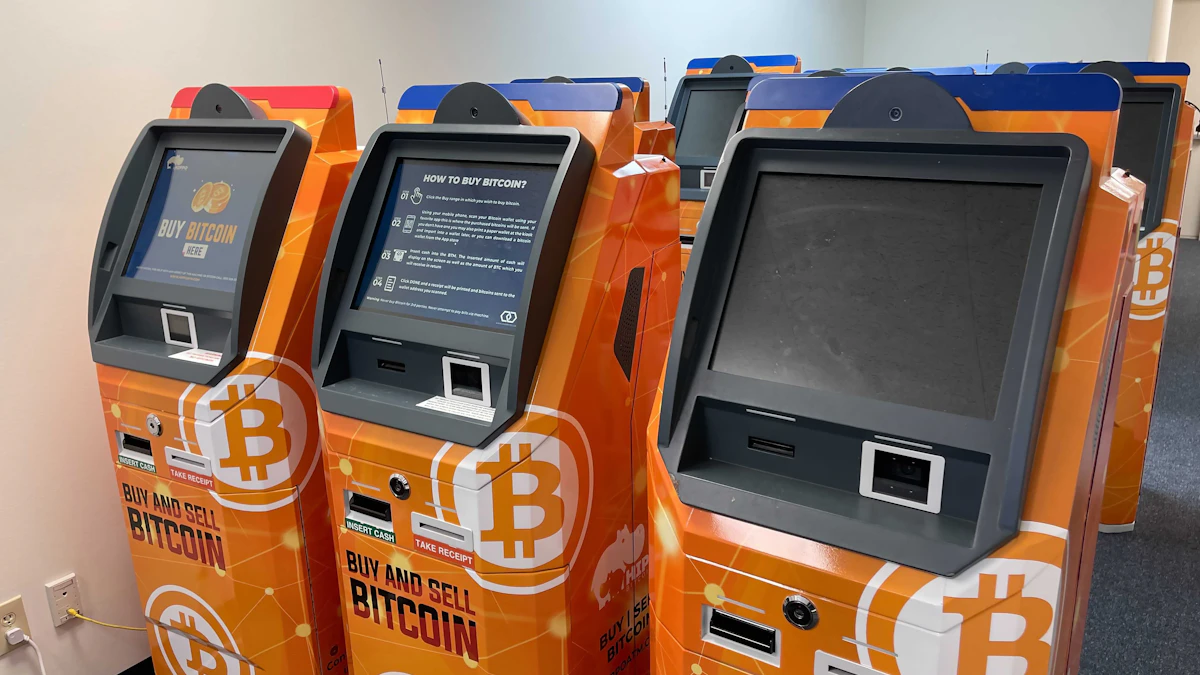
If you have ever wondered how a bitcoin ATM works, the short version is this: you feed the machine cash, it sells you bitcoin at its own price, and it sends the coins to a wallet address you scan. The convenience is real. So is the cost, which is usually far higher than buying through an app. Here are the numbers worth knowing before you walk up to one.
- 37,342: crypto kiosks in the US on January 1, 2025, up from 4,128 in 2019, according to Coin ATM Radar data cited by FinCEN.
- 7% to 20%: the typical range of transaction fees at these machines, per FinCEN.
- 25%: the commission one operator charged in a federal case FinCEN highlighted.
- $1,000: California's daily limit per customer at crypto kiosks.
- 15% or $5: California's cap on what an operator can collect per transaction, whichever is greater.
- $246.7 million: losses tied to crypto kiosks in complaints to the FBI in 2024.
- $10,000: the median loss in Bitcoin ATM scams reported to the FTC in the first half of 2024.
How a bitcoin ATM actually moves your money
Despite the name, a bitcoin ATM is not connected to your bank the way a cash machine is. It is closer to a vending machine that sells one product. In its notice on crypto kiosks, FinCEN describes the process in four parts:
- You identify yourself. Depending on the operator and the amount, that can be as light as a phone number or as heavy as a scan of your government ID.
- You give the machine a wallet address, almost always by holding a QR code up to its camera.
- You insert cash (some machines also take a debit or credit card).
- The machine sends bitcoin to that address, either from coins the operator already holds or through a separate exchange it connects to.
That second step is the one that matters most. The machine does not check who owns the address. Whatever wallet the QR code points to receives the coins, and a bitcoin transfer cannot be pulled back once it is sent. If you are new to wallets and addresses, our guide on how crypto wallets work explains what that QR code really represents.
Operators make their money from fees, which is why you find these kiosks in places with long hours and steady foot traffic: gas stations, convenience stores, supermarkets and cafes. FinCEN treats kiosk operators as money services businesses, which means they generally must register with FinCEN. Registration is not an endorsement, though. FinCEN states plainly that it does not license or vouch for these businesses.
Why the 7% to 20% fee range matters most
The single biggest number here is the fee. FinCEN says kiosk fees commonly run 7% to 20% of the transaction, which it calls high compared with other ways of moving money. Some machines show the fee as a line item. Others build it into the exchange rate, so the price per bitcoin on the screen sits well above the market price you would see in a price app. Either way, the effect is the same: you get less bitcoin for your cash.
The top of that range is not the ceiling, either. In one federal case FinCEN described, an operator charged commissions of up to 25%, which the agency called significantly above the market rate. FinCEN also lists "unusually high transaction fees" and "opaque rates and fees" among its warning signs for operators that may be doing something worse than overcharging.
For comparison, mainstream apps and exchanges usually charge a small fraction of that. Our walkthrough on how to buy bitcoin covers the current fees at Cash App, Coinbase, Venmo and Kraken if you want to compare.
What California's $1,000 limit and 15% cap tell you
Most states do not set specific kiosk rules, but California does, and its numbers are a useful yardstick. Under the state's Digital Financial Assets Law, as summarized by the California DFPI, an operator may not accept or dispense more than $1,000 a day from one customer. Since January 1, 2025, operators must also show disclosures before the transaction and may not collect more than $5 or 15% of the dollar value of the crypto involved, whichever is greater.
Those rules exist because regulators kept finding problems. The DFPI has fined one operator $675,000 for charging California customers fees and markups above the legal maximum and noted that many of those customers were over 60. Outside California, your state may set no fee cap at all, so reading the screen carefully before you insert cash is your best protection.
The $246.7 million scam number, explained
The other set of numbers is about fraud. In 2024 the FBI's Internet Crime Complaint Center received more than 10,956 complaints involving crypto kiosks, with about $246.7 million in reported losses, according to FinCEN's summary of the FBI report. That was a 99% jump in complaints and a 31% rise in losses from 2023.
The FTC reported that losses to Bitcoin ATM scams grew nearly tenfold from 2020 to more than $110 million in 2023, and topped $65 million in just the first half of 2024. The median reported loss in that period was $10,000. People 60 and older were more than three times as likely as younger adults to report losing money this way.
The pattern behind those numbers is almost always the same. Someone posing as a government agency, a bank, or tech support calls and says your savings are at risk. They tell you to withdraw cash, drive to a kiosk, and scan a QR code they send you, often staying on the phone the whole time. The FTC's guidance on crypto and scams warns that once you scan a scammer's QR code, the payment goes straight into their wallet and is gone. Our cash bitcoin safety checklist lists the red flags in detail.
A worked example: $500 in, how much bitcoin out?
Say you bring $500 in cash to a kiosk, and bitcoin is trading at $80,000 on major exchanges. The machine's total fee works out to 15%, a common figure and the most a California machine may charge on a purchase this size.
- Fee: $500 × 0.15 = $75
- Value actually converted to bitcoin: $500 minus $75 = $425
- Bitcoin received: $425 ÷ $80,000 = 0.0053125 BTC
Now run the same $500 at a 20% machine:
- Fee: $500 × 0.20 = $100
- Bitcoin received: $400 ÷ $80,000 = 0.005 BTC
To break even on the 15% purchase, bitcoin would need to rise from $80,000 to about $94,118 ($500 ÷ 0.0053125). That is an increase of roughly 17.6% just to get back to where you started, before any fee you pay later to sell. At 20%, the break even price is $100,000, a 25% rise. The fee is subtracted before you own anything, which is why the percentage hurts more than it first looks.
The prices above are only for illustration. Check the live market price on a trusted app, then compare it with the price the machine quotes, and you will know the real markup in seconds.
Before you scan anything
Bitcoin ATMs do what they promise for people who want to turn cash into bitcoin quickly. Just make sure the wallet address on that QR code is yours and that you set it up yourself. If someone else gave it to you, stop. If money has already gone out, file reports at ReportFraud.ftc.gov and ic3.gov, then follow our steps on how to report a scam. You can find more plain guides like this one in our crypto section.
Sources
- FinCEN Notice on the Use of Convertible Virtual Currency Kiosks (FIN-2025-NTC1)
- FTC: New FTC Data Shows Massive Increase in Losses to Bitcoin ATM Scams
- California DFPI: Digital Financial Assets Law
- California DFPI: DFPI Cracks Down on Cash to Crypto Kiosk Operators
- FTC Consumer Advice: What To Know About Cryptocurrency and Scams
Share this story
Spotted an error? Tell us